Song Meaning
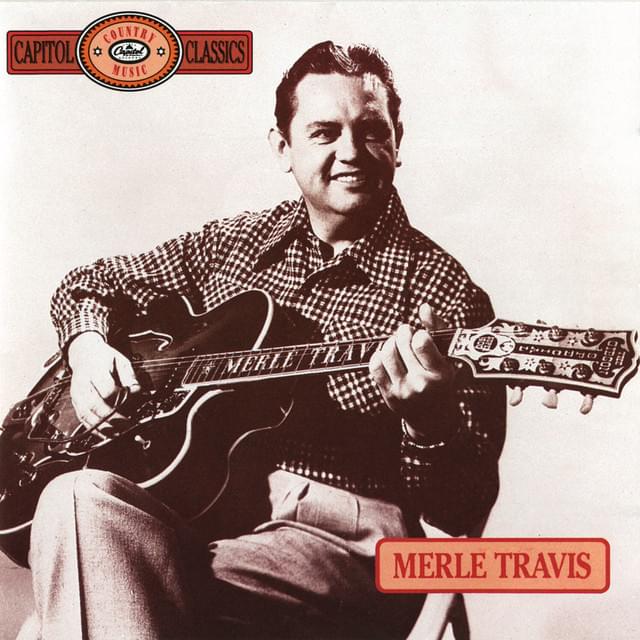
{"song_id": 15356615, "meaning": "Merle Travis's \"Kinfolks In Carolina\" operates on multiple levels, seemingly a simple ode to family and regional pride, but with a mischievous undercurrent that complicates its surface charm. The song establishes a clear sense of place and heritage. Carolina serves as the anchor, a locus of family history and tradition. References to geographical markers, from \"north of Georgia\" to \"east of East Tennessee,\" paint a vivid picture of rootedness. The mention of Aunt Mollie in Raleigh and cousins in Charlotte further solidify this sense of belonging. Even the nod to a Confederate ancestor (\"my grandpa fought with Robert E. Lee\") reinforces the narrative of deeply embedded Southern identity.
However, the insistent repetition of \"But there's a little gal...\" disrupts this narrative of inherited kinship. The singer's focus shifts from blood relations to a chosen connection, a romantic interest who, significantly, is \"really ain't no kin to me at all.\" This highlights a tension between the bonds of family and the allure of personal desire. He elevates this woman to a position of paramount importance, declaring he'll \"make her my closest kinfolks, after all.\" This isn't merely about finding love; it's about actively constructing a new kind of kinship, one based on affection and mutual choice rather than lineage.
The song's charm lies in this playful subversion. While seemingly celebrating the importance of family and Southern heritage, \"Kinfolks In Carolina\" ultimately champions the power of individual agency in defining one's own sense of belonging. The \"little lump of sugar up in Asheville\" represents a departure from the expected path, a deliberate forging of new familial ties that supersede the inherited ones. The image of buying a \"weddin' ring\" and riding the \"New River train\" signals a journey towards a self-determined future, where chosen connections matter more than bloodlines. Even the \"rebel yell\" seems repurposed, less a cry of Confederate pride and more a declaration of romantic independence."}
 View Artist