Song Meaning
The lyrics paint a picture of a grand, almost apocalyptic, cosmic event. There's a sense of nomadic souls searching for ultimate meaning, culminating in a moment of "Eschaton" – a final reckoning or fulfillment. This pivotal moment is marked by the self-purging of "Uru-Salim," a name with ancient connotations, suggesting a profound cleansing or transformation of a sacred place or entity. The departure of "Djinns" signifies the end of earthly spirits or influences, carried away in "Sphynx-like chariots," emphasizing a majestic and mysterious exodus.
This departure is framed as the completion of a mission, with "The Emissaries' task is fulfilled." The lyrics then introduce the concept of "myth's dual meaning," hinting at a complex, layered reality being revealed or resolved. The central refrain, "This is the testimony of the Epigenesis," positions the entire event as a foundational narrative, a new beginning or a fundamental reordering of existence. The repetition of this phrase underscores its significance as the core message.
The writing crafts a feeling of immense scale and finality, using evocative imagery like "colossal Sphynx-like chariots" and the loaded term "Eschaton." The contrast between the striving "nomadic souls" and the definitive, almost predetermined, departure of the Djinns creates a tension between human searching and cosmic decree. The cyclical nature implied by "genesis" and "Eschaton," coupled with the idea of a new "Epigenesis," suggests a profound rebirth following a cataclysmic end.
What makes these lyrics resonate is their ambitious scope and the deliberate ambiguity that invites contemplation. The specific, yet mythic, language – Uru-Salim, Djinns, Sphynx – grounds the abstract concept of a cosmic end in tangible, albeit ancient, imagery. The repeated declaration of "the Epigenesis" serves as an anchor, a pronouncement that this profound transformation is not just an event, but a fundamental truth being revealed.
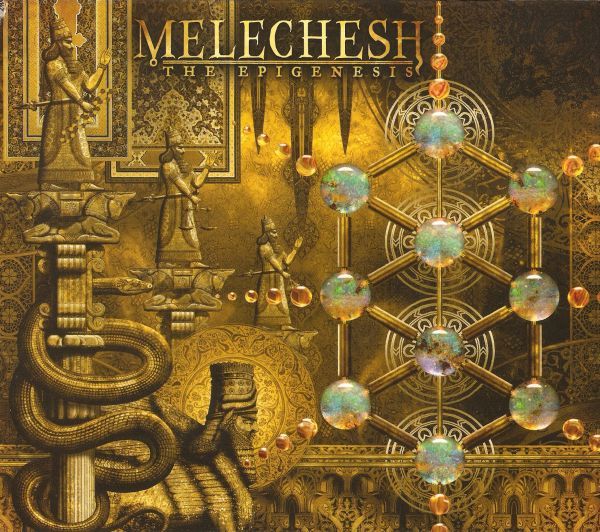
 View Artist