Song Meaning
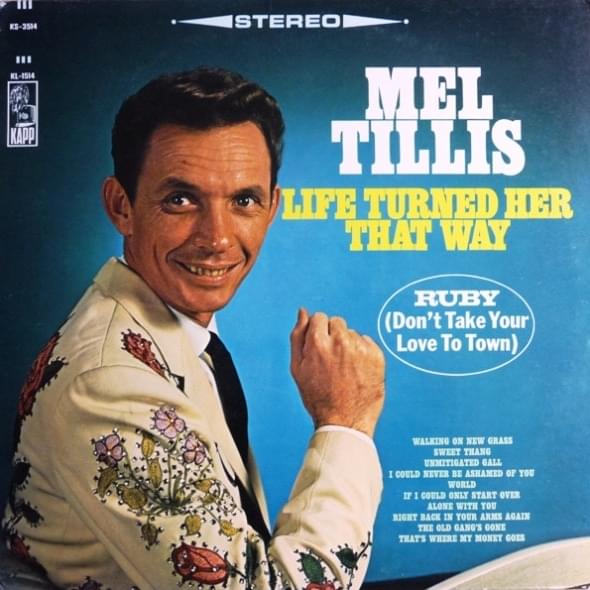
Mel Tillis's rendition of "Ruby, Don't Take Your Love to Town" isn't just a country ballad; it's a stark portrait of emasculation, resentment, and the quiet desperation simmering beneath a facade of patriotic duty. The song's meaning hinges on the chasm between the narrator's past virility and his present helplessness. He's a veteran, rendered physically impotent by "that old crazy Asian war," now forced to witness his wife, Ruby, seek affection elsewhere. It's a brutal inversion of the traditional masculine role, where the provider and protector is reduced to a dependent, clinging to a love that's clearly slipping away. The lyrics paint a picture of Ruby preparing to go out, a ritual he's witnessed countless times, each instance a fresh wound to his pride. There's a palpable sense of powerlessness in his plea, "Ruby, don't take your love to town," a futile attempt to control a situation spiraling beyond his grasp.
The narrator's wounded pride manifests as a chillingly casual threat in the line, "And if I could move I'd get my gun and put her in the ground." It's not just anger; it's the rage of a man stripped of his agency, reduced to fantasizing about violence as a means of reclaiming control. This isn't a love song; it's a lament for lost masculinity, a bitter reflection on the cost of war, and a disturbingly honest portrayal of the dark thoughts that can fester in the shadows of physical and emotional dependency. The lyrics analysis reveals a man trapped, not just by his physical limitations, but by the societal expectations of what it means to be a man.
Ultimately, the tragedy of "Ruby, Don't Take Your Love to Town" lies in its unflinching depiction of a broken bond. The narrator's pleas are not born of love, but of need and a desperate attempt to maintain a semblance of dignity. Ruby's repeated departures underscore the futility of his efforts, highlighting the devastating consequences of war that extend far beyond the battlefield. The song's final, desperate cry, "Ruby, for God sake's turn around," encapsulates the agonizing realization that he's lost her, not just for the night, but perhaps forever. The song meaning is less about infidelity, and more about the profound psychological toll of war, aging, and the disintegration of identity.
 View Artist