Song Meaning
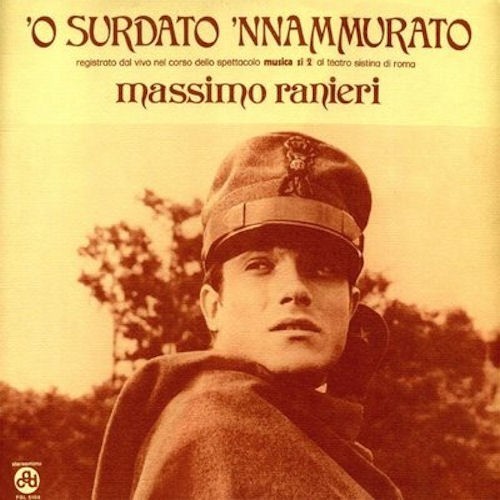
Massimo Ranieri's passionate rendition of "'O surdato 'nnammurato" pierces the heart with a timeless ache of longing and devotion. The song, a Neapolitan classic, transcends mere romance; it's a visceral expression of love entwined with the pain of separation, amplified by the soldier's context. The lyrics paint a portrait of a man physically distant from his beloved, his thoughts and heart constantly drawn back to her. The opening lines establish this immediate yearning – a desperate flight of the mind to bridge the gap between them. It’s a love declared with absolute certainty, a bedrock of unwavering faith in the face of wartime uncertainties. This emotional intensity is the song's core.
The refrain, "Oje vita, oje vita mia, Oje core 'e chistu core" (Oh life, oh my life, Oh heart of this heart), serves as a powerful, almost desperate, incantation. It's a raw outpouring of affection, a primal scream of love that underscores the woman's centrality to the soldier's very existence. The repetition reinforces the obsessive nature of his feelings; she is not just a lover, but the essence of his life force. He acknowledges the torment of sleepless nights, the absence of her touch, the unfulfilled desires that haunt his dreams. Yet, even in this lament, there's a poignant beauty, a testament to the enduring power of love to transcend physical absence.
Beneath the surface of romantic pining lies a deeper psychological landscape. The soldier's constant reassurance – "Si' sicura 'e chist'ammore" (Be sure of this love) – hints at an underlying anxiety, a fear that distance and time might erode the bond they share. His plea for her to write and remain content reveals a vulnerability, a reliance on her love to sustain him through the hardships of war. He elevates her above all others, declaring that no beauty can surpass hers. This isn't mere flattery; it's a psychological defense mechanism, a way of solidifying her importance in his mind and reaffirming the worth of what he's fighting for. "'O surdato 'nnammurato" isn't just a love song; it's a study in the psychology of separation, a poignant exploration of how love can become both solace and torment in the face of adversity.
 View Artist