Song Meaning
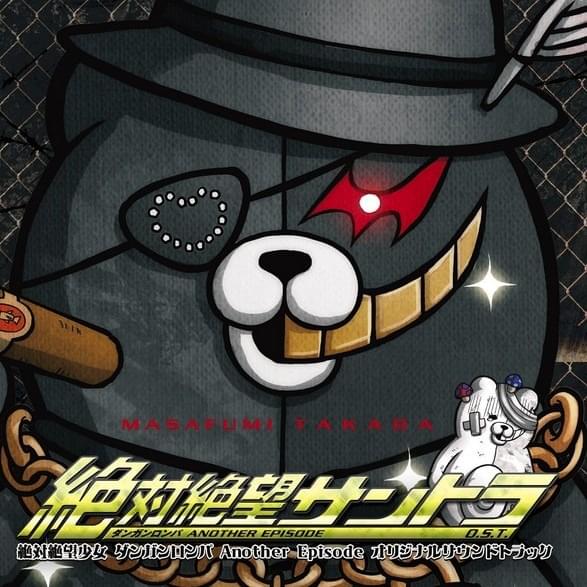
These lyrics paint a chilling picture of childlike glee twisted into a violent fantasy, centered around a character named Monokuma. The opening lines immediately set a disturbing tone, inviting listeners to "let's have fun killing" and declaring that "adults aren't needed." This isn't just playful mischief; it's a call to mass murder, framed as a competition to create a hundred or a thousand corpses. The repeated phrase "Let's play with Monokuma forever" underscores a desire for this dark game to never end, suggesting a complete immersion in this violent, escapist world.
The core tension lies in the juxtaposition of innocent childhood imagery with horrific acts of violence. The narrator proposes building mountains of corpses and a campfire out of dead bodies, all while singing songs and laughing. This warped sense of fun is amplified by the repeated commands to Monokuma: "Hunt! Hunt! Monokuma!" and "Bite! Bite! Monokuma!" The lyrics suggest that with Monokuma's presence, the children feel "invincible" and "safe," highlighting a disturbing reliance on this figure for validation and protection within their violent game.
The most striking aspect of the craft is the relentless cheerfulness applied to extreme brutality. Phrases like "let's kill with smiles" and "let's sing happily" are used to describe murder and the overflow of blood. The lyrics explicitly state, "If we sing with cheerful voices, blood will overflow," creating a jarring contrast that emphasizes the psychological detachment from the violence. This deliberate pairing of joy and death transforms the act of killing into a perverse form of celebration, a "children's paradise" built on the remains of adults.
This song's effectiveness stems from its ability to evoke discomfort through its cheerful depiction of mass murder. The lyrics don't shy away from the gruesome details, but they frame them with an almost naive enthusiasm. The repeated insistence on playing with Monokuma forever suggests a complete rejection of reality and an embrace of a fantasy where violence is the ultimate form of play. It's this unsettling blend of innocence and depravity, anchored by the figure of Monokuma, that makes the lyrics so impactful and disturbing.
 View Artist