Song Meaning
The lyrics paint a picture of a relentless, almost cosmic force of destruction that is both creative and annihilating. It's a "luminous, tireless destruction" that constantly reshapes itself, casting "false Heavens" and wielding "tongues of flame." This destructive energy isn't external; the narrator feels it welling up within, describing it as a "hissing flame of old" and a "torch with which we shall light the sky." This internal fire is presented as a primal force, a "Chaos Equilibrium" that the narrator embraces.
The central tension arises from the narrator's active participation in this destructive cycle, bordering on religious fervor. They "drank the guilt of the Ancients" to achieve a state of "devotion" and aspire to "die the death of a Messiah." This suggests a desire for a transformative, albeit apocalyptic, end, seeking a divine "wrath" and ultimately "Death!" The repetition of "Come Lord spill thy wrath!" and "Come Lord grant us Death!" underscores this yearning for a cataclysmic release.
The writing crafts a disorienting sense of omnipresence and inescapable fate. Phrases like "Within, without, above, around" and "Underneath, beside, beyond, entwined" create a feeling of being surrounded and consumed by this force. The imagery shifts from the "spear of eyes" to the "maul of Sight," suggesting an aggressive, all-consuming perception that mirrors the destructive intent. The ultimate destination is a void, the "Hole of Holes expands," leading to the stark pronouncement: "Nowhere, no-one, nothing, death!"
This lyrical descent into a self-embraced apocalypse is effective because it taps into a primal fear of annihilation while simultaneously presenting it as a form of ultimate liberation or fulfillment. The narrator's willing surrender to this overwhelming force, framed by religious and messianic language, creates a disturbing yet compelling narrative of seeking meaning through absolute negation. The cyclical imagery of "loops and coils, spiral pulse" and "perfect circles" reinforces the sense of an inevitable, all-encompassing end that the narrator actively seeks.
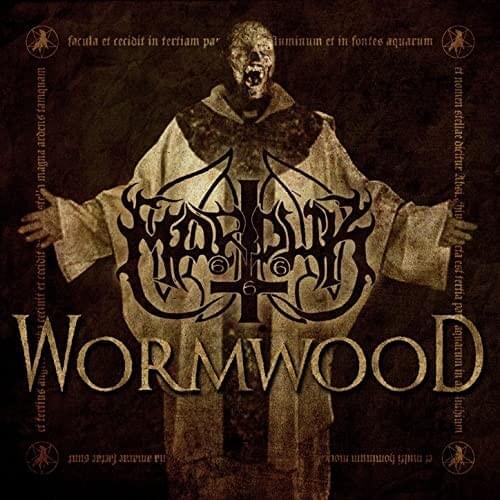
 View Artist