Song Meaning
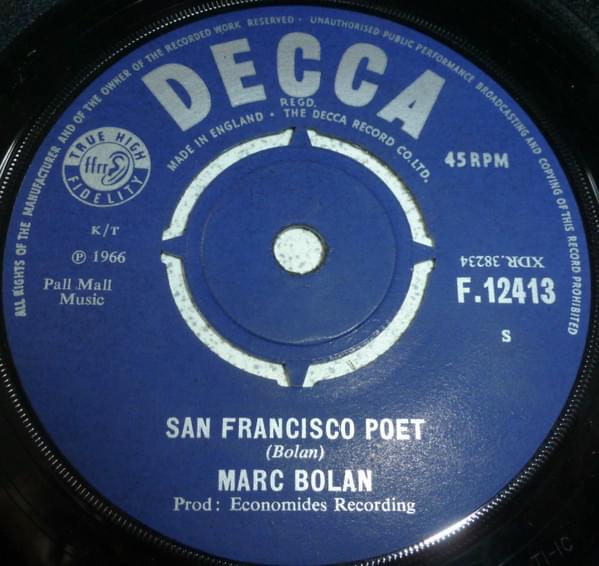
Marc Bolan's "San Francisco Poet" isn't just a song; it's a sly wink at the counter-culture, a glitter-dusted jab at the pretensions of artistic identity. Bolan, never one to shy away from irony, dissects the romanticized image of the poet, specifically the "San Francisco poet," a figure already steeped in layers of myth and cliché. The repeated lines about "schooling days were ruling days" suggest an inherent performativity, a learned behavior designed to impress rather than a genuine outpouring of artistic angst. The narrator seems acutely aware of the act, almost mocking his own willingness to be captivated by the poet's persona ("Crazy just to see how foolish I can be").
The song's genius lies in its ambiguity. Is Bolan celebrating or satirizing this figure? Perhaps both. The lines "Hey there, Frisco poetically speaking / The days of the beatnicks are gone" hint at a generational shift, a recognition that the original wellspring of Beat poetry has run dry, leaving behind only echoes and imitations. Yet, there's also a playful defiance in the proclamation that "The Bible's all written wrong," a nod to the rebellious spirit that fueled the Beat movement in the first place. Bolan isn't dismissing the impulse towards artistic expression; he's questioning its authenticity, its tendency to become a self-serving performance.
Ultimately, "San Francisco Poet" functions as a mirror reflecting the listener's own expectations and biases. We project our desires onto the artist, eager to be swept away by their perceived wisdom and originality. Bolan, with his characteristic swagger and lyrical dexterity, dares us to consider whether the emperor has any clothes, whether the poet's pronouncements are profound insights or simply well-rehearsed lines delivered with charismatic flair. The song remains a relevant commentary on the nature of artistic identity and the seductive power of image, even decades after its release.
 View Artist