Song Meaning
Manu Gavassi's "(não te vejo meu)" operates in the liminal space between profound connection and elusive understanding. The Portuguese lyrics paint a portrait of a relationship defined by paradox: familiarity interwoven with strangeness, presence underscored by absence. The opening lines, "Te conheço há momentos ou há três mil anos" (I've known you for moments or three thousand years), immediately establish this tension. It suggests a bond that transcends linear time, hinting at past lives or a soulmate connection, yet existing solely in the present moment. This "strange encounter" is further amplified by the line "Sua voz me lembra uma época que eu não vivi" (Your voice reminds me of a time I didn't live), creating a sense of déjà vu and an almost unsettling recognition. The "song meaning" lies not in concrete narrative, but in the emotional resonance of these conflicting sensations.
The chorus, "Não te vejo meu, mas te sinto menos seu" (I don't see you, mine, but I feel you less yours), is the crux of the song's emotional core. The phrase "não te vejo meu" suggests a lack of ownership or perhaps a distance, whether physical or emotional. This could be interpreted as a fear of commitment, a recognition of the other person's autonomy, or the painful awareness that the relationship is not fully reciprocated. However, the subsequent line, "mas te sinto menos seu" (but I feel you less yours), introduces a subtle but crucial shift. It implies that while the connection may not be fully realized or claimed, there's a diminishing sense of external possession or influence on the other person. This hints at a shared intimacy that exists independently of external labels or expectations.
The verses delve deeper into the speaker's internal landscape. The line "Rasurou meu livro, tento decifrar" (Erased my book, I try to decipher) suggests that the other person has disrupted the speaker's carefully constructed narrative, forcing them to re-evaluate their understanding of themselves and the world. This disruption, while potentially unsettling, is also presented as an opportunity for growth and self-discovery. The subsequent line, "Tenho um fraco por palavras nunca ditas" (I have a weakness for words never said), reveals a fascination with the unspoken, the subtext, and the mysteries that lie beneath the surface of communication. In essence, Manu Gavassi's "(não te vejo meu)" explores the complexities of human connection, embracing the ambiguity and the emotional intensity that arise when two souls meet in a space that defies easy definition.
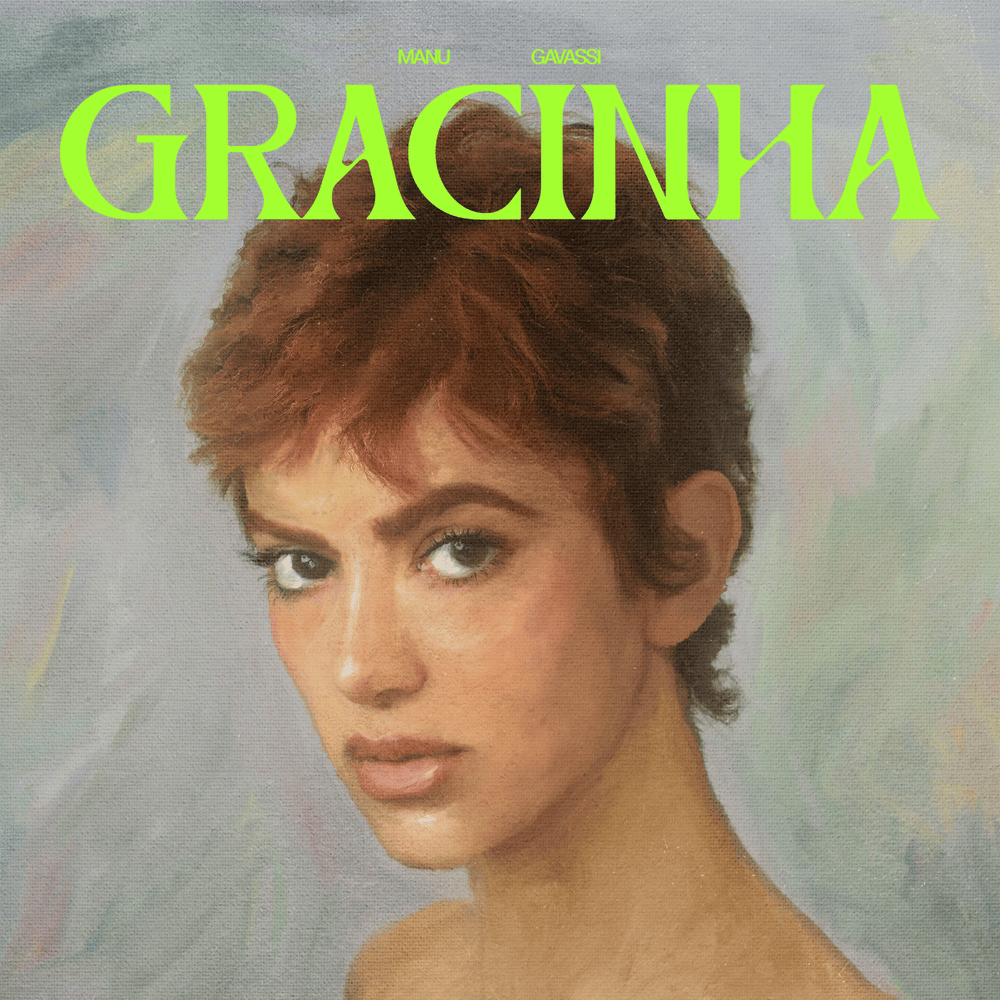
 View Artist