Song Meaning
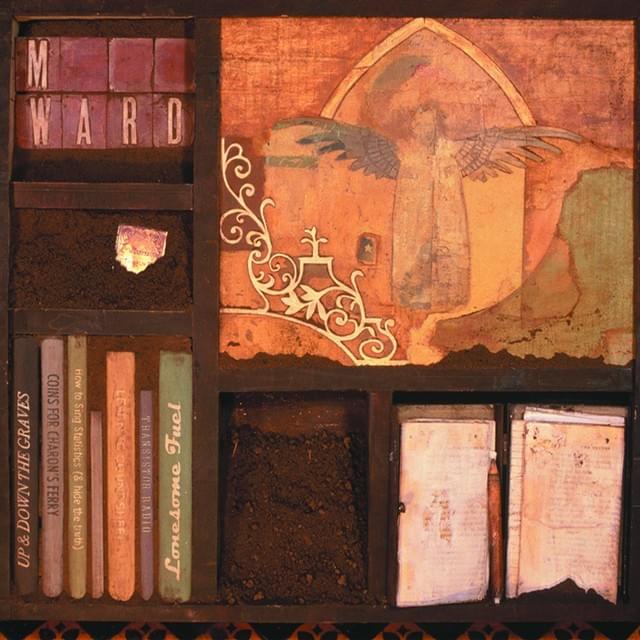
M. Ward's "Fuel for Fire" isn't just a song; it's a miniature study in melancholic repetition, a sonic echo chamber where the heart perpetually finds itself back at square one. Ward, a master of understated emotional landscapes, paints a picture of a life lived on repeat, fueled by a particular brand of loneliness. The 'lonesome fuel for fire' becomes the central metaphor, suggesting that heartbreak, isolation, or perhaps a deep-seated dissatisfaction, paradoxically feeds the very experiences meant to alleviate it. The 45s and books, the journeys undertaken, all circle back to the same point, hinting at a Sisyphean struggle against an inner void.
The song's brilliance lies in its cyclical structure, mirroring the lyrical content. The opening lines return at the close, emphasizing the feeling of being trapped in a loop. The repeated assertion that 'the song is always the same' and 'the story's always the same' isn't just a lyrical motif; it's a reflection of a psychological state. Ward touches on this with lines like 'I dug beneath the wall of sound / I ended up back where I started,' suggesting that even attempts at profound exploration lead back to the initial point of unease. The 'wall of sound' could represent the noise and distractions of modern life, all ultimately failing to provide lasting solace.
The chorus, a series of stark images, further dissects this 'fuel for fire.' It's 'a bitter ending / To a sweet, sweet day,' the 'sour note inside / The orchestra wail,' the 'uncomfortable pulses / Between famous last words.' These aren't grand tragedies, but rather the subtle disappointments and anxieties that accumulate over time, the tiny fissures in an otherwise pleasant facade. The final image, 'missing persons / In a small, small world,' is perhaps the most poignant, capturing the feeling of profound isolation even within the context of connection. Ultimately, "Fuel for Fire" explores the bittersweet truth that sometimes, the very things we use to comfort ourselves can also perpetuate our loneliness.
 View Artist