Song Meaning
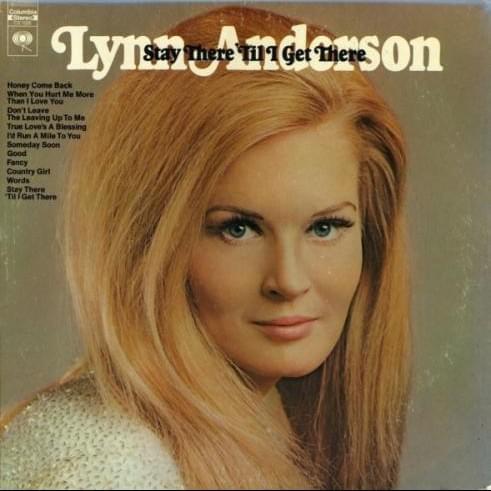
Lynn Anderson's "When You Hurt Me More Than I Love You" doesn't offer a tale of immediate liberation; instead, it charts the agonizing calculus of a love slowly bleeding to death. The song’s core concept revolves around a tipping point, a hypothetical moment where the scales finally balance, and the pain inflicted outweighs the affection stubbornly clinging to life. It’s a forensic examination of heartbreak, delivered with the cool precision that defined much of Anderson's work. The narrator isn't celebrating freedom, but rather bracing for it, almost as if freedom itself is a threat. She seems trapped in a masochistic loop, clinging to the relationship until it actively repels her. The repeated line, "When you hurt me more than I love you," serves as both a warning and a promise – a bleak countdown to the inevitable. It's not a question of *if*, but *when*.
The brilliance of the lyric lies in its understanding of emotional thresholds. Love, as presented here, isn't an infinite resource, but a finite quantity eroded by repeated offenses. Each heartache brings the narrator closer to the edge. The lines "Maybe mine next heartache will be the final one / Cause maybe I won't love you when it's done" are particularly devastating, showcasing the fragile hope that maybe, just maybe, the next blow will be the last one needed to break free. There's a weary resignation in her voice, an acknowledgment that self-preservation hinges on reaching this breaking point. She’s not proactively seeking an escape; she's passively waiting for the pain to become unbearable.
Ultimately, “When You Hurt Me More Than I Love You” explores the complex psychology of staying in a damaging relationship. It’s a song about the slow burn of resentment, the gradual accumulation of emotional debt. The narrator's passive voice suggests a deep-seated lack of agency, a feeling of being acted upon rather than acting. The "someday" when "This love that's kept me yours so long / Will die someday if I'll be gone" feels both distant and inevitable, a dark promise hanging over the entire song. It’s a stark reminder that love, even the most tenacious kind, has its limits, and that sometimes, the only way out is through the pain.
 View Artist