Song Meaning
The narrator is grappling with the absence of someone described as "the transparent girl," a figure who seems to have become ethereal and elusive. The opening lines immediately establish a sense of distance and wonder, questioning her current whereabouts and the forces that sustain her. This sets a melancholic tone, tinged with a desperate curiosity about her transformation and current existence, suggesting a profound disconnect that the narrator struggles to bridge. The narrator's own coping mechanism, "sleeping as much as possible to think of other things," highlights their inability to escape these thoughts.
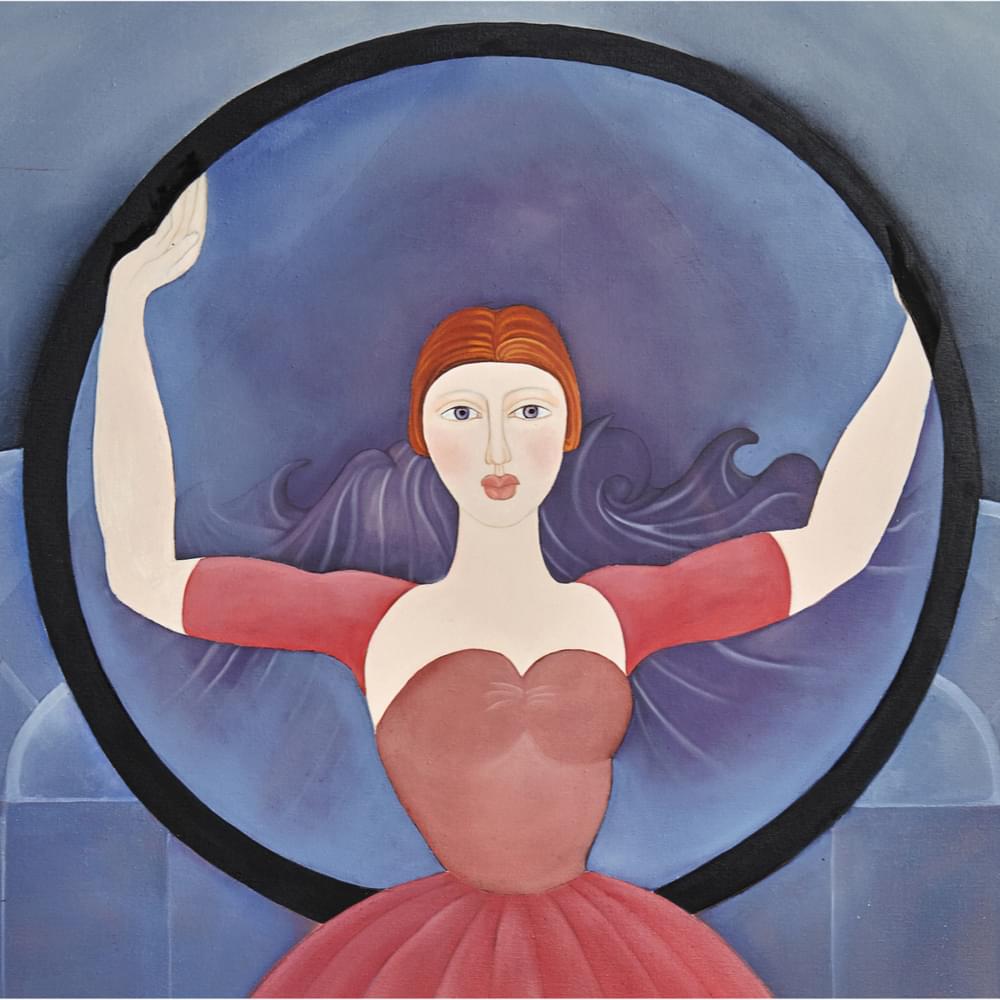
The lyrics paint a picture of the transparent girl's new reality as one of urban detachment and artificial light, contrasting sharply with a presumed past connected to nature. She now resides in a "palace," her former "countryside" confined to a "park," and spends nights within a "tower of light." This urban existence, illuminated by street lamps, suggests a life that is perhaps more visible yet less tangible, a stark shift from whatever grounded reality she once inhabited. The narrator's own attempts to find solace, like descending into subways as a substitute for the sea, mirror this theme of seeking natural elements in unnatural environments.
The core of the song lies in the paradoxical nature of transparency itself, as articulated in the repeated refrain: "Since she is transparent she can be everything." This line is crucial, suggesting her elusiveness is also her omnipresence; she can be found "in music or in the shape of a cloud." Yet, this ability to be anything also implies a lack of solid form, making her a "ghost" whom the narrator can no longer truly grasp. The question, "Tell me if I hold your hands too tight," reveals the narrator's fear of losing even this spectral connection, a desperate attempt to anchor something that is inherently unbound.
This lyrical construction effectively conveys the pain of losing someone not to death, but to an intangible transformation that renders them both everywhere and nowhere. The narrator's longing is amplified by the girl's perceived ability to exist in abstract forms – music, clouds – elements that are beautiful but impossible to hold. The contrast between the narrator's grounded, albeit melancholic, reality and the girl's fluid, almost mythical existence creates a poignant emotional resonance, capturing the ache of loving someone who has become fundamentally unreachable.
 View Artist