Song Meaning
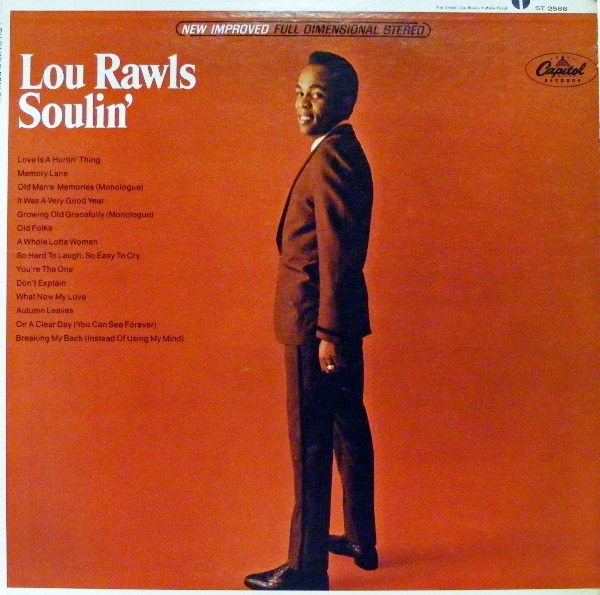
Lou Rawls's rendition of "On A Clear Day (You Can See Forever)" isn't just a song; it's an aspirational psychic event set to music. The lyrics paint a picture of transcendence, a moment of clarity so profound it allows the listener to perceive the infinite. It suggests that the limitations we experience are not inherent but are instead constructs of our clouded perceptions. The repeated phrase "On a clear day" acts as a conditional trigger, hinting that this state of heightened awareness is attainable, but requires a specific alignment of inner and outer worlds. It's a seductive proposition: shed your mental baggage, and suddenly, the universe unfolds.
Rawls's interpretation, steeped in his signature soulful delivery, amplifies the song's inherent optimism. The lyrics speak of a world previously unheard, a connection to "every mountain, sea, and shore." This hints at a Jungian concept of collective unconsciousness – the idea that we are all interconnected through a shared, universal experience. The "glow of your being outshines every star" is a bold statement of self-worth, suggesting that inner light, when allowed to shine, can eclipse even the most dazzling external phenomena. It's a powerful message of self-actualization delivered with the smooth confidence that Rawls perfected.
Ultimately, the song's meaning resides in its invitation to imagine a reality unburdened by limitations. The repetition of "forever and evermore" isn't just lyrical flourish; it's a hypnotic suggestion, a planting of the seed that such a boundless state of being is not only possible but within reach. It's a reminder that the potential for profound understanding and connection lies dormant within us, waiting for that elusive "clear day" – a moment of openness, vulnerability, and acceptance – to unlock its transformative power.
 View Artist