Song Meaning
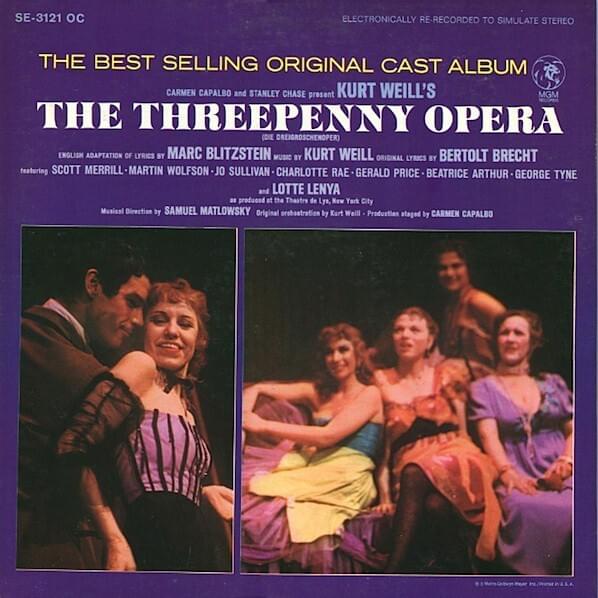
This opening sets a stage of audacious, almost defiant, artistic intent. The ballad singer immediately frames the upcoming work not as a grand spectacle, but as an "opera for beggars." This isn't just a label; it's a declaration of its conception and accessibility. The very idea of "splendor" being something a beggar could imagine highlights a radical redefinition of luxury and value. It suggests a world where true richness lies in imagination, not material wealth. The opera's affordability, to the point where even a beggar could afford it, further cements this inversion of traditional artistic economics. It's a bold statement that the most profound experiences can and should be within reach for everyone. The title, "The Threepenny Opera," is the punchline, a deliberately understated name for something conceived with such grand, albeit unconventional, aspirations. It's a wink and a nod, promising a narrative that plays with expectations of what opera should be. The lyrics are a meta-commentary, preparing the audience for a work that deliberately subverts bourgeois notions of art and commerce. This deliberate framing creates an immediate tension between the perceived lowliness of its origins and the high-mindedness of its artistic ambition. The craft here is in the direct address and the paradoxical pronouncements, immediately establishing a tone of ironic commentary and social critique. critique. It's effective because it challenges the listener's preconceptions from the very first words, promising a story that is both grand in spirit and humble in its presentation.
 View Artist