Song Meaning
The narrator addresses Rosemary directly, painting a picture of her as someone on the cusp of womanhood, whose romantic future is yet to unfold. There's a palpable sense of anticipation, a belief that Rosemary's true love is destined to arrive. This isn't just a hopeful wish; it's presented as a certainty, a foregone conclusion the narrator seems to possess. It's a gaze fixed on a future moment when Rosemary will fully blossom, romantically speaking.
This anticipation is framed by a gentle, almost paternalistic certainty. The narrator repeatedly states, "Yo sé Rosemary" (I know Rosemary), establishing a position of knowledge and foresight regarding her emotional development. The comparison to a flower surrendering itself "Al llegar la primavera" (When spring arrives) is particularly telling. Spring here functions as a metaphor for maturity and the natural, inevitable blooming of love, suggesting Rosemary's romantic awakening is as natural and predictable as the changing seasons.
The lyrics introduce a subtle layer of uncertainty with "Quizás" (Perhaps), acknowledging the possibility of "ilusión" (illusion) existing in both Rosemary and the narrator. This hints at a potential gap between the narrator's confident predictions and the reality of Rosemary's inner world or the nature of their potential connection. Yet, this doubt is quickly subsumed by the overarching conviction that everything will ultimately work out, echoing the idealized narratives of fairy tales where love conquers all and happy endings are guaranteed.
The persistent repetition of Rosemary's name and the narrator's "Yo sé" creates a hypnotic effect, reinforcing the narrator's unwavering belief in this predetermined romantic outcome. The lyrics effectively capture a feeling of hopeful, almost possessive, expectation, projecting a future where Rosemary's love becomes entirely the narrator's, much like a storybook ending where spring brings not just renewal, but a specific, desired fulfillment.
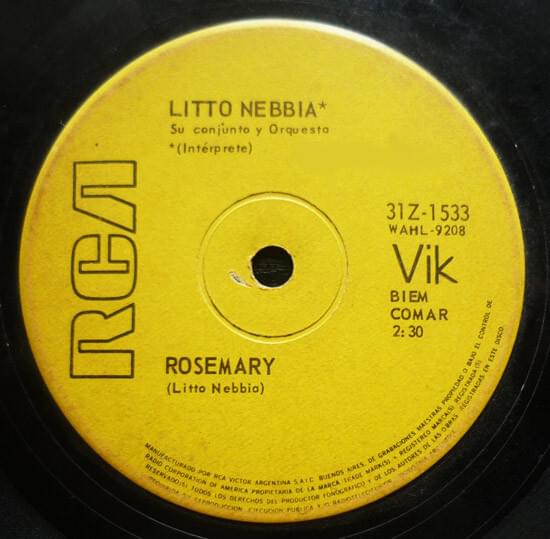
 View Artist