Song Meaning
The lyrics present a stark contrast between a perceived external expectation and the narrator's internal reality. The repeated assertion "Someone will take you whole and you'll see that it is right" suggests a societal or relational pressure to be fully consumed or accepted by another. This external force is immediately countered by the insistent refrain, "My heart isn't confetti," establishing the core tension: the narrator refuses to be scattered, fragmented, or easily discarded.
The central conflict seems to stem from a fear of loss or a potential future where the narrator might "lose this time." The line "I'll wake and I'll hide in the dark, for two" implies a desire for shared solitude or a retreat into intimacy if things go wrong. Yet, this potential withdrawal is juxtaposed with a powerful, almost primal urge: "basically, I wanna taste this." This phrase, simple yet loaded, points to a desire for experience, for living fully, perhaps even for a love that doesn't require the narrator's fragmentation.
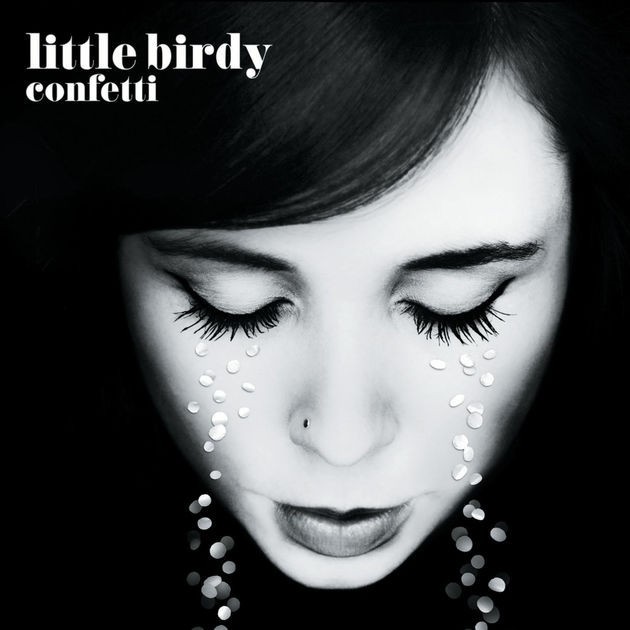
The most striking craft element is the direct, almost defiant repetition of "My heart isn't confetti." This isn't a gentle metaphor; it's a declaration of self-possession. Confetti is inherently disposable, meant to be thrown and then swept away. By rejecting this image, the narrator asserts an integrity and wholeness that resists being treated as mere celebratory debris. The phrase "The road is long enough for two" further reinforces this idea of a partnership that respects individual space and pace, not one that demands complete absorption.
Ultimately, these lyrics resonate because they articulate a common struggle: the push and pull between conforming to external pressures of belonging and maintaining one's essential self. The narrator’s insistence on not being "confetti" speaks to a deep-seated need for authentic connection that honors individuality, a desire to "taste" life without being consumed by it.
 View Artist