Song Meaning
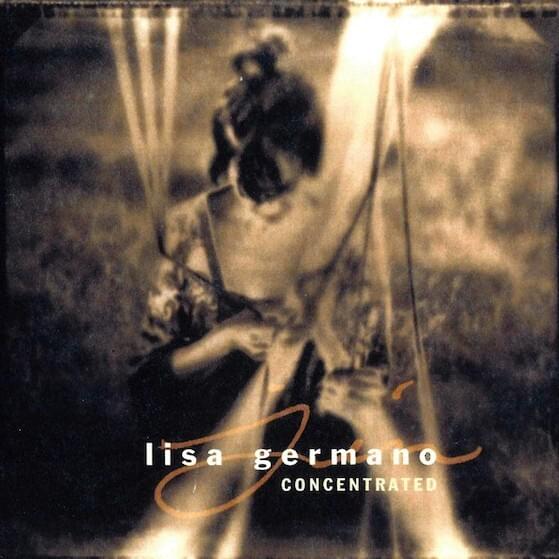
{"song_id": 10328323, "meaning": "Lisa Germano’s haunting sensibility finds a disturbing echo in \"Victoria's Secret (Just a Bad Dream)\" by Miamo-tutti, a raw nerve exposed and repeatedly prodded. The song’s core isn't really about lingerie; it's a primal scream against the insidious, often unspoken, comparisons women face. The repeated question, “What is Victoria’s secret?” becomes less about the brand and more about the unattainable ideal it represents—a manufactured standard of beauty weaponized through advertising and, perhaps more devastatingly, internalized self-doubt. The simplicity of the lyrics is deceptive; it reflects the reductive, binary way women are often pitted against each other.
The song's power lies in its unflinching portrayal of insecurity. Lines like, \"Looking at you has me more blue / Than I was before I got you,\" cut deep because they acknowledge the corrosive effect of constantly measuring oneself against an external, often fabricated, yardstick. The repeated taunt, \"You are ugly, I am pretty / Your man wishes you looked like me,\" delivered with a childlike simplicity, amplifies the cruelty. It's the kind of thought that burrows into the subconscious, feeding anxieties about desirability and self-worth. The phrase \"just what I need today shoved in my face\" speaks to the pervasiveness of these comparisons, which feel unavoidable in a world saturated with idealized images.
The bridge, with its stark juxtaposition of \"pretty lonely, ugly woman,\" hints at the emptiness behind the facade of beauty. Is the \"pretty\" woman truly happy, or is she just as trapped by societal expectations? The question, \"Are you real / Or am I simply ugly, ugly?\" underscores the fragile nature of self-perception when constantly bombarded with external validation. The song meaning ultimately resides in this agonizing uncertainty, this relentless questioning of self-worth in the face of manufactured ideals. The raw, almost desperate repetition of the chorus underscores the obsessive nature of this internal struggle, leaving the listener with an unsettling sense of unease and a lingering question about the true cost of chasing an impossible standard."}
 View Artist