Song Meaning
The lyrics paint a picture of a clandestine encounter that unfolds in the absence of the apartment's owner. The repeated phrase "Guess it all started in your apartment" grounds the narrative in a specific, charged location, immediately establishing a sense of transgression. The narrator, present while the owner is away in Europe, becomes involved with the owner's subletter, a figure initially perceived as angelic. This sets up a tension between the perceived purity of the "angel" and the illicit nature of the interaction that follows.
The central conflict seems to revolve around desire and transgression within borrowed space. The narrator admits to a physical advance, "I put my mouth up against her halo," a bold move made publicly "in front of your roommates." The subsequent journey on the subway, "two at a time through the turnstile," suggests a shared, impulsive momentum, a doubling down on the secretive act. This shared experience, however, is immediately juxtaposed with the arrival of a postcard from the owner, "from The Pantheon," highlighting the owner's distant, idealized experience while the narrator is engaged in something far more grounded and morally ambiguous.
The lyrics cleverly use contrasting imagery and loaded phrases to explore this tension. The initial perception of the subletter as an "angel" with a "halo" is directly challenged by the narrator's actions and the subsequent confession, "I'm sorry that I got your sublet." This apology is layered; it's an admission of guilt but also perhaps a wry acknowledgment of the situation's complexity. The line "We've all got our little secrets" serves as a confessional, normalizing the transgression while simultaneously underscoring the hidden nature of these acts. The repeated observation that "city slickers" and "Coney Island" look "incredible" feels like a projection, a search for beauty and intensity in the urban landscape that mirrors the narrator's own charged, albeit illicit, experience.
What makes these lyrics resonate is their unflinching portrayal of impulse and consequence within a confined social dynamic. The narrator's actions are bold, almost reckless, yet tinged with a confession and a sense of shared human fallibility. The juxtaposition of the owner's grand European tour with the narrator's intimate, secretive encounter in the owner's own space creates a potent dramatic irony. The writing captures a specific kind of urban thrill—the allure of the forbidden and the complex emotions that accompany it, all anchored in the mundane yet charged setting of an apartment and a subway ride.
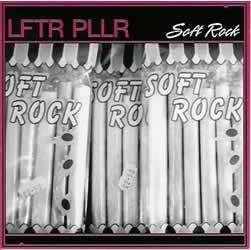
 View Artist