Song Meaning
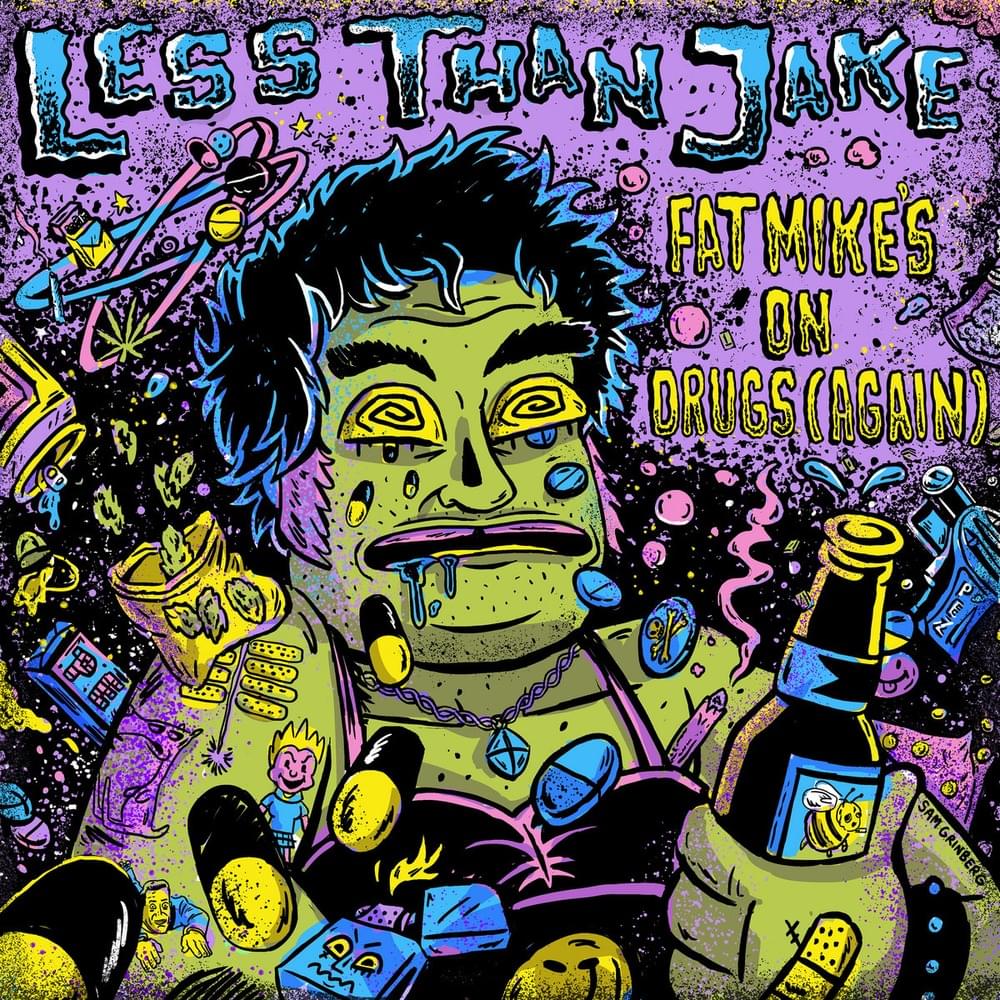
The lyrics paint a picture of consistent, bewildering behavior attributed to substance use. The narrator repeatedly states "He musta been on drugs" followed by a specific, often bizarre action. These actions range from professional decisions like firing someone, to eccentric personal choices like wearing a "pink rubber dress," to questionable business moves involving other bands and even being "A.T.M." by porn stars. The sheer absurdity of these events fuels the central refrain: "We don't know why, we don't know when / But we all think Fat Mike's on drugs again."
The core tension lies in the narrator's bewildered observation of someone else's self-destructive or nonsensical actions. There's a sense of detached judgment mixed with a grudging acceptance of the pattern. The repeated phrase "He musta been on drugs" acts as a dismissive explanation for actions that defy logic, implying that only intoxication could lead to such choices. This creates a cyclical narrative where each strange event reinforces the initial assumption, solidifying the idea that the subject's behavior is predictable only in its unpredictability, driven by a recurring state of altered consciousness.
The most striking aspect of the craft is the relentless cataloging of peculiar incidents, presented as evidence for the central thesis. The lyrics don't delve into the *why* but focus on the *what*, listing actions like putting "the Bombpops in a box" or "kept digging that hole" with a cryptic warning. This direct, almost reportorial style, punctuated by the simple, repetitive chorus, emphasizes the narrator's inability to comprehend the subject's motivations, resorting instead to the blanket explanation of drug use. The repetition of "Drugs, Drugs, Drugs, Drugs" further hammers home this singular focus.
Ultimately, the effectiveness of these lyrics stems from their bluntness and the sheer specificity of the strange events described. The narrator's voice is one of exasperated observation, presenting a series of disconnected, odd occurrences as proof of a singular, ongoing problem. It’s this combination of bizarre, concrete examples and the unwavering, almost resigned conclusion that makes the narrative stick, creating a vivid, if unflattering, portrait of someone perceived to be perpetually under the influence.
 View Artist