Song Meaning
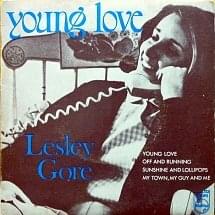
Lesley Gore's "Young Love" isn't just a saccharine ode to adolescent romance; it's a meticulously crafted artifact of early 1960s pop, reflecting a very specific cultural script around teenage love and commitment. The song meaning resides not so much in its lyrical complexity (there isn't much), but in its unwavering commitment to the idealized vision of 'first love' as the ultimate, defining experience. Gore, still a teenager herself when she recorded this, embodies the earnestness and vulnerability that the song demands. It's a performance of innocence, carefully constructed for a generation poised on the cusp of profound social change.
The lyrics themselves are straightforward declarations of devotion. Phrases like "heavenly touch of your embrace" and "filled with true devotion" paint a picture of a love that's pure, untainted, and almost divinely ordained. There's a sense of inevitability woven into the narrative, the idea that "for every boy and girl, there's just one love in this old world." This is a powerful message, particularly for young women of the era, reinforcing the notion that finding 'the one' is not just desirable, but almost preordained. The repetition of "Young love, first love" in the chorus acts as a mantra, cementing the idea that this initial experience is not merely fleeting infatuation but a profound emotional bond.
However, viewed through a contemporary lens, "Young Love" reveals its limitations. The song's unwavering belief in monogamy and the permanence of first love feels almost quaint. The absence of any hint of conflict or complexity suggests a sanitized version of reality, one that perhaps served as a comforting fantasy for a generation grappling with anxieties about the future. While the song may evoke nostalgia for a simpler time, it also serves as a reminder of the societal pressures and expectations that once shaped our understanding of love and relationships. Ultimately, the song's enduring appeal lies in its ability to tap into the universal human desire for connection and the enduring power of those first, formative experiences, even if those experiences are viewed through the rose-tinted glasses of memory and cultural conditioning.
 View Artist