Song Meaning
The lyrics paint a picture of someone grappling with self-doubt and a desire for external validation, questioning established norms. The opening lines, "Où est l'erreur, d'où vient l'orage / Nous humecter sans protection," immediately set a tone of confusion and vulnerability, suggesting a feeling of being exposed and unprepared for life's challenges. This is framed as a moment of awakening, "C'est l'aube, c'est l'heure d'atteindre l'âge / De suspecter les traditions," indicating a critical re-evaluation of inherited beliefs and societal structures.
The narrator repeatedly turns to a "Computer," asking for an objective assessment of their worth: "Computer, dis-moi mon niveau / Sans pudeur dis-moi ce que je vaux." This plea highlights a deep-seated insecurity, a need for data-driven confirmation in the face of internal uncertainty. The contrast between the mechanical, objective "Computer" and the deeply personal "détecteur de mes songes" and "processeur d'obsessions" underscores the internal conflict between a desire for logical answers and the messy reality of human emotion and thought.
A central tension emerges in the recurring refrain: "Je réveille l'ennemi / Derrière mes lignes / J'attends un signe." This suggests a self-sabotaging tendency, where the narrator perceives their own internal struggles or vulnerabilities as an "enemy" that is being exposed or nurtured. They "nourris l'ennemi" and "partage mes ruines," indicating a complex relationship with their own perceived flaws, perhaps even a reluctant acceptance or a desperate attempt to understand them by projecting them outwards. The repeated waiting for "un signe" or "un compagnon" reveals a yearning for connection or guidance amidst this internal conflict.
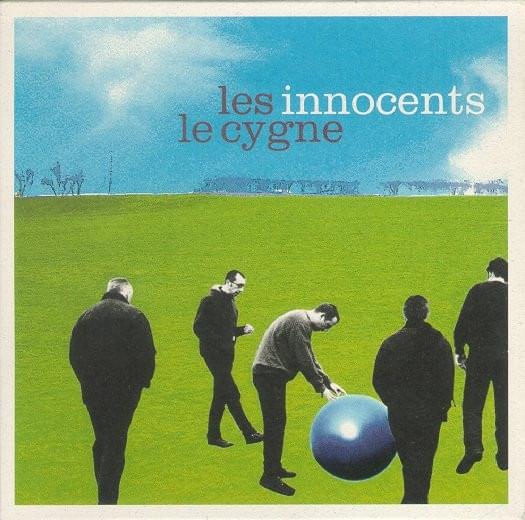
The lyrics culminate in a profound desire for harmony and shared expression, encapsulated by the repeated wish, "Que chantent nos cygnes / A l'unisson." The "cygne" (swan) appears as a symbol of grace, beauty, or perhaps a moment of profound artistic or personal revelation. The narrator is waiting for this moment of clarity or shared understanding, whether it comes as a "signe," a "chanson," or an "oraison." The final lines, "J'attends, c'est long," emphasize the arduous nature of this waiting period, suggesting that true self-acceptance and external harmony are hard-won and take considerable time and introspection.
 View Artist