Song Meaning
The narrator paints a stark picture of someone who feels overlooked by those who supposedly know them best. They aren't idealized; instead, they're defined by a persistent, almost passive longing and a faithful waiting. This waiting is directly tied to another person's forgetting, a cyclical state where the narrator ceases to exist in their awareness until they choose to return. The core of their identity here is shaped by this external oblivion and subsequent forgiveness.
The central tension arises from the narrator's unwavering devotion versus the other person's apparent disregard. The phrase "När hon glömt, glömt att jag finns" (When she's forgotten, forgotten I exist) is the linchpin, highlighting a relationship where the narrator's presence is conditional and easily erased. This leads to a pattern of being hurt and then forgiving, only to be disappointed again, suggesting a deep-seated pattern of self-betrayal born from this unreciprocated waiting.
The repetition of "Blickar jag kastar / På någon som jag ser / Kan väcka en tanke / Men leder aldrig till nåt mer" (Looks I cast / On someone I see / Can awaken a thought / But never leads to anything more) is a powerful illustration of this. It shows a desperate, yet ultimately futile, search for connection or perhaps a distraction, but these fleeting moments never develop, reinforcing the narrator's isolation and the singular focus on the person who forgets them.
This lyrical construction is effective because it captures a specific, painful kind of emotional dependency. The narrator's self-definition as "han som längtar" (the one who longs) and "han som troget väntar" (the one who faithfully waits) is both a statement of their current state and a self-imposed limitation. The repeated emphasis on being forgotten and then forgiving creates a sense of inescapable melancholy, making the listener feel the weight of this one-sided devotion.
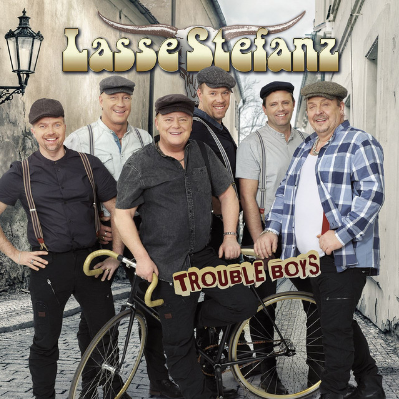
 View Artist