Song Meaning
{"song_id": 14138185, "meaning": "Kristeen Young's \"Year Of The Woman\" isn't the celebratory anthem one might expect. Instead, it's a raw, confrontational dissection of female identity, expectation, and the often-contradictory demands placed upon women. The opening lines immediately establish this tension, rejecting superficial praise (\"Don't deserve the flowers you're sent\") while simultaneously highlighting a perceived inherent flaw: \"Their scent can't conceal the odor of woman.\" This isn't about empowerment in a simple, declarative sense; it's about the complex, often unpleasant realities of living within a female body and navigating societal expectations.
The lyrics further explore the ways women are perceived and the masks they are expected to wear. The lines \"Now what's this new butch mask you wear?/Where have you been a million years?\" suggest a frustration with performative aspects of gender, perhaps a rejection of authenticity in favor of what is deemed acceptable or fashionable. This is compounded by the line \"Still can't be seen without your face on,\" indicating a reliance on constructed appearances, a fear of vulnerability and exposure. The repeated assertion of fear and loneliness, the weariness of constant strength, offers a stark counterpoint to the idealized image of the empowered woman. The speaker yearns for connection (\"Want my lover/C'mon\") while simultaneously wrestling with the internalized pressures that prevent genuine intimacy.
Perhaps the most brutal lines are \"All your traits great went the way of your dead mothers/So-long.\" This suggests a cyclical nature to the perceived failings of womanhood, a passing down of inherited limitations and disappointments. However, there's also a hint of rebellion in the repeated lines. The final iteration, \"Not scared of not being strong,\" marks a potential turning point. It's an acknowledgement of vulnerability, a rejection of the expectation of constant fortitude, and perhaps a step towards genuine self-acceptance. \"Year Of The Woman\" isn't a celebration; it's a reckoning, a dismantling of expectations, and a plea for authentic connection in the face of societal pressures."}
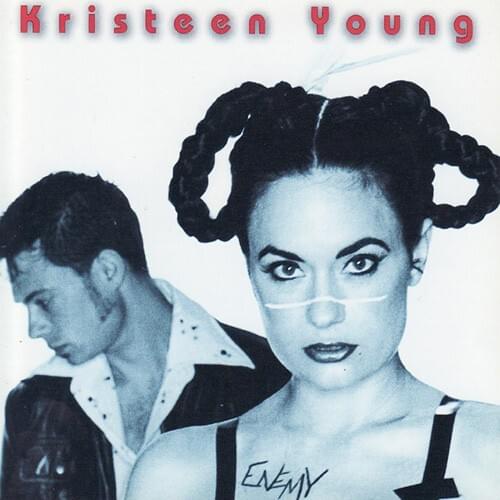
 View Artist