Song Meaning
The lyrics paint a stark picture of overwhelming debt, not just financial but existential. The narrator feels indebted for everything, even their thoughts, trapped in a cycle of obligation and powerlessness. This feeling is amplified by a sense of being constantly watched and judged, as if every action, past or present, carries an inescapable penalty. The opening lines, "Debo todo lo que tengo / Debo hasta mis pensamientos," immediately establish this suffocating burden, setting a tone of profound constraint.
The central tension arises from the conflict between the narrator's desire for freedom and the reality of their perpetual confinement. The phrase "libertad condicional" (conditional liberty) is the core of this paradox, suggesting a state of being free only in name, always under threat of revocation. The imagery of a "celda" (cell) and "visita" (visit) reinforces this, portraying a life lived under constant surveillance and judgment, where even moments of perceived respite are painful reminders of their true situation. The repeated plea, "Madre que me están matando / Asesinos de morfeo," underscores the psychological toll, suggesting a slow, agonizing demise inflicted by unseen forces.
The lyrics masterfully employ metaphors of a game and a prison to convey this inescapable predicament. The narrator feels like "Un balón de reglamento" (a regulation ball), kicked around by forces beyond their control, constantly "Voto voto y me reboto / Porque siempre salen ellos" (I vote, I bounce back, because they always win). Later, the world is seen "en un espejo / Pero yo no me reflejo" (in a mirror / But I don't reflect myself), highlighting a profound alienation and loss of self. The "vampiro suelto" (loose vampire) image powerfully captures the feeling of being drained, with "Casi no me queda sangre" (I have almost no blood left), a visceral representation of depletion.
Ultimately, these lyrics resonate because they articulate a deep-seated feeling of being trapped by circumstances and obligations that are impossible to escape. The writing crafts a powerful emotional landscape of despair and exhaustion, where freedom is an illusion and every breath feels like a debt. The narrator's struggle against unseen "asesinos de morfeo" (killers of Morpheus) and the constant threat of "pagar" (paying) for everything creates a potent, unsettling portrait of a life lived perpetually on the edge, under a sentence that never truly ends.
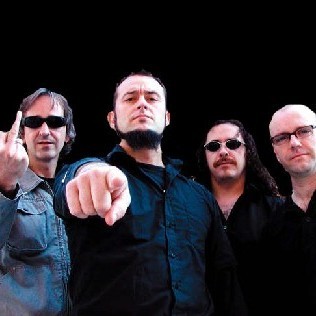
 View Artist