Song Meaning
The lyrics paint a picture of someone trying to dissuade a departing "boy" from leaving, framing his ambition as misguided. The opening verse throws out a mix of languages and playful commands, like "令你嘻嘻, bye-bye" and "C'est la vie," suggesting a casual, perhaps even dismissive, attitude towards his departure. The core message, however, is a stark warning: "When you leave New York, you go...nowhere." This refrain acts as a central thesis, implying that any attempt to escape or find something better elsewhere is ultimately futile.
The narrator seems to understand the "boy's" motivations, acknowledging he has a "mission" and that "Love's your Capitán," even referencing "Helen of Troy." Yet, this understanding is immediately undercut by advice to "Fix it" and "Don't run after it." This creates a tension between recognizing the allure of ambition and love, and a deep-seated belief that pursuing them outside of the current context is a losing game. The narrator appears to be projecting their own past failures or disillusionment onto the departing figure.
The recurring phrase "kookie karma" in the outro is particularly striking. It suggests a cyclical, perhaps self-inflicted, fate that the narrator believes is inevitable for those who try to leave. The repetition of "Anchors aweigh, boy" juxtaposed with this "kookie karma" creates a sense of ironic detachment; the act of setting sail, meant to signify adventure and progress, is framed as a descent into a peculiar, predetermined misfortune. The narrator's own plea, "let me be / Your life go away," hints at a desire to detach from this perceived cycle, even as they warn the "boy" against it.
Ultimately, the effectiveness of these lyrics lies in their blend of playful, almost nonsensical language with a surprisingly bleak and fatalistic outlook. The casual dismissal of grand ambitions through phrases like "Forget that ship ahoy" and the insistence that "you go...nowhere" creates a powerful emotional undercurrent of resignation and perhaps even envy. The narrator's attempt to hold onto the "boy" is less about genuine affection and more about reinforcing their own worldview, where leaving is simply a path to a "kookie karma."
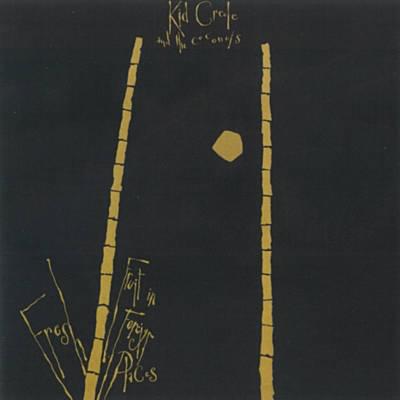
 View Artist