Song Meaning
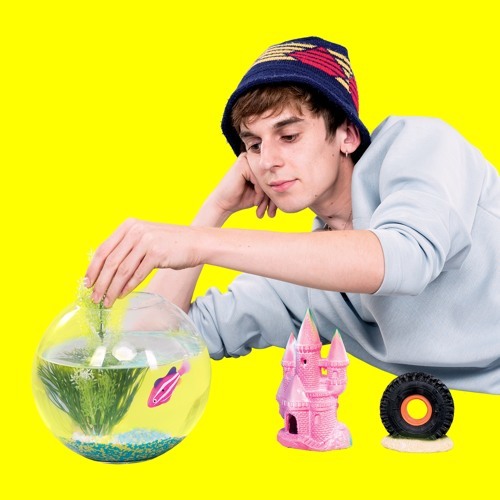
The lyrics paint a picture of confinement, using the image of a small fish in a bowl to represent a limited existence. The narrator directly addresses this fish, questioning its desires: "Do you pine for the sea?" This immediately establishes a central tension between the perceived safety of a contained environment and the vast unknown of freedom. The fish is observed "watching life all around you," a passive existence that prompts the question, "Are you looking at me?" suggesting a disconnect or perhaps a projection of the narrator's own feelings onto the creature.
The pre-chorus details the routine of this confined life: "Swim around in a circle" and "feeding time." The fish is even crowned "king of the castle," an ironic title for a creature with no real agency. The most poignant question arises with the contemplation of escape: "But when you find the ocean / How will you know where to go?" This highlights the paralyzing effect of freedom when one is unaccustomed to it, suggesting that the boundaries of the fishbowl, while restrictive, also provide a clear, albeit limited, path.
The second verse introduces a shift with a line in Japanese, "小さい場所だけど / 幸せそう," which translates to "It's a small place, but / You seem happy." This offers a counterpoint to the earlier questioning, suggesting that perhaps contentment can be found even within limitations. However, the subsequent question, "When I see you tomorrow / Will you remember this song?" brings the focus back to the narrator's own experience and the fleeting nature of these observations and reflections. The repetitive, almost hypnotic chorus of "Oohs" underscores the cyclical nature of the fish's existence and perhaps the narrator's own contemplation of their place.
Ultimately, the effectiveness of these lyrics lies in their simple, yet profound, metaphor. The fishbowl becomes a potent symbol for any situation where one's world is small, whether by choice or circumstance. The song doesn't offer easy answers but instead poses questions about desire, contentment, and the fear of the unknown, leaving the listener to ponder the boundaries of their own perceived limitations and the potential anxieties of breaking free.
 View Artist