Song Meaning
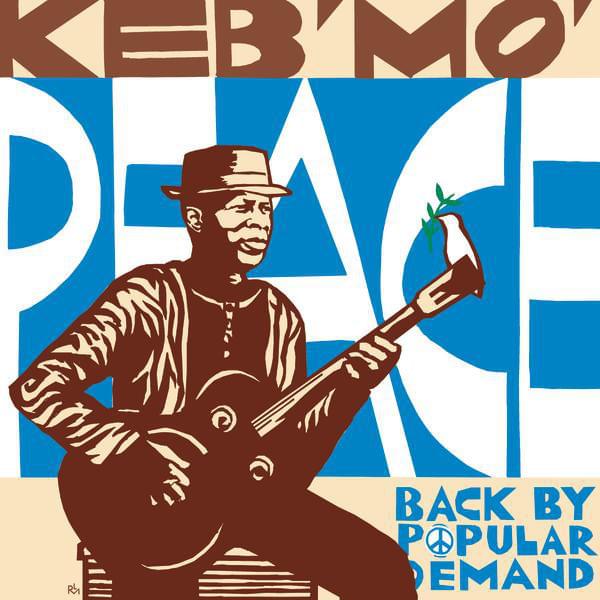
Keb' Mo's interpretation of "Imagine" arrives as a balm in a world perpetually teetering on the brink. Stripped of the original's sometimes saccharine veneer, Mo's rendition cuts to the heart of John Lennon's utopian vision, presenting it not as naive fantasy but as a practical, achievable goal. The song meaning, at its core, is a call for radical empathy, a shedding of the ideological baggage that separates us. It's an invitation to consider a world unburdened by the constructs of nationhood, religious dogma, and material obsession. Mo' doesn't shy away from the immensity of the ask, but rather frames it as a series of simple, almost childlike, thought experiments: "Imagine there's no heaven... It's easy if you try." The ease, of course, is the illusion; the real work lies in dismantling the ingrained beliefs that prop up the status quo. But perhaps, Mo' suggests, the act of imagining itself is the first step towards tangible change.
The brilliance of "Imagine," and by extension Mo's cover, lies in its accessibility. It doesn't preach or moralize; it simply poses a question: What if? What if we prioritized collective well-being over individual gain? What if we defined ourselves not by what divides us, but by what unites us? The lyrics delicately challenge the very foundations of our societal structures, from the concept of national borders to the role of religion. By removing these perceived necessities, the song shines a light on their inherent limitations, suggesting that they may be more of a hindrance than a help in achieving true global harmony. The repeated refrain, "You may say I'm a dreamer, but I'm not the only one," serves as both a defiant statement of hope and an inclusive invitation to join the movement.
Ultimately, Keb' Mo's interpretation of "Imagine" is a powerful reminder that change begins with a shift in perspective. It's a song that dares to envision a world free from the shackles of greed, violence, and division, urging us to actively participate in the creation of that reality. It's not about escaping the present, but about transforming it, one imagined possibility at a time. The true challenge of "Imagine" lies not in the ease of the thought experiment, but in the courage to act upon its implications.
 View Artist