Song Meaning
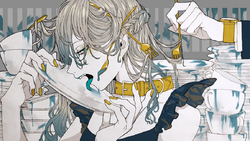
The lyrics to "Henshoku" immediately plunge the listener into a desperate plea for affection. The speaker repeatedly begs "Darling, Darling, love me," escalating quickly to an unsettling demand: "More, more, until I break." This intense longing culminates in the shocking question, "Eat me?"
This isn't just a request for love; it's a cry of profound, insatiable hunger. The speaker confesses "It's not enough at all" and "I want it, I want it, I can't help it," revealing a deep emotional void that no amount of affection seems to fill. There's a clear awareness of transgression, as the narrator admits, "I know it's wrong," yet remains consumed by an overwhelming desire for the "Darling."
The central, most striking image is the repeated invitation to "eat me?" and later, "taste me?" This visceral metaphor transforms love into a form of consumption, suggesting a desire for total absorption and possession, both of the self by the other and vice-versa. The speaker also tempts the "Darling" by asking, "You're 'the same' as me, aren't you?", attempting to draw them into this intense, perhaps unhealthy, dynamic before "the magic breaks."
The raw honesty of these lyrics creates a powerful, almost uncomfortable intimacy. The speaker's oscillating emotions—from desperate longing to a confession of feeling "sick," "painful," and "lonely"—paint a portrait of an individual trapped by an all-consuming obsession. The parenthetical whispers, like "Can you hear me?" and "Let's atone for our sins," further blur the lines between victim and instigator, leaving the listener with the unsettling sense of a love that is both deeply desired and inherently destructive.