Song Meaning
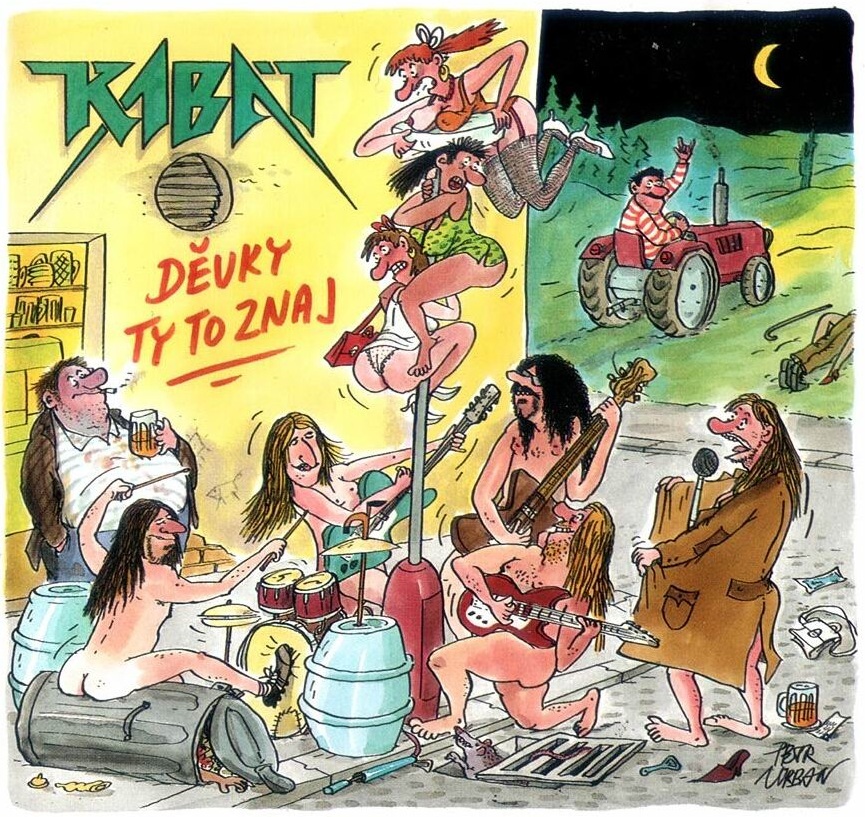
The narrator paints a stark picture of a "moderní děvče" (modern girl) who, upon seeing a boy, makes him feel like a clown destined for the circus. She's described with "růžovou vestu a modrý voči" (a pink vest and blue eyes), spinning around at the disco, and her apparent thought is "Jú ten je báječný, jistě má prachy" (Oh, he's wonderful, he surely has money). This immediately establishes a superficial, materialistic view of attraction from her side, setting up a contrast with the narrator's own struggles.
The core tension arises from the narrator's self-perception versus his aspirations. He observes that "moderní holky" (modern girls) appear angelic but have "rohy" (horns), suggesting a hidden, perhaps deceitful, nature. He laments finding a "moc špatnou cestu" (very bad path), confessing to drinking and smoking, feeling he has "klesnul" (fallen). His desire is to be "jiný, bystrý a krásný" (different, sharp, and beautiful) and to find happiness in love, a stark contrast to his current state.
The most striking element is the repetitive, almost desperate refrain of "Denně vožralej" (Daily drunk). This phrase hammers home his current reality: a large belly, smelling bad, being dirty, and failing to attract women. The irony is thick; he wishes for a different life, a "moderní" existence perhaps, but is trapped in a cycle of self-destruction, only celebrating when he's lucid enough to acknowledge his state. The "Oléo, oléo" interludes, referencing Rio de Janeiro and a name, feel like fleeting, perhaps escapist, thoughts or distractions from his grim reality.
This lyric's effectiveness lies in its blunt honesty and the raw contrast between idealized modern life and the narrator's squalid existence. The simple, direct language about his physical state and habits makes his despair palpable. The repeated "Denně vožralej" acts as a self-condemnation, highlighting the chasm between his dreams of being "bystrý a krásný" and the harsh, smelly truth of his present.
 View Artist