Song Meaning
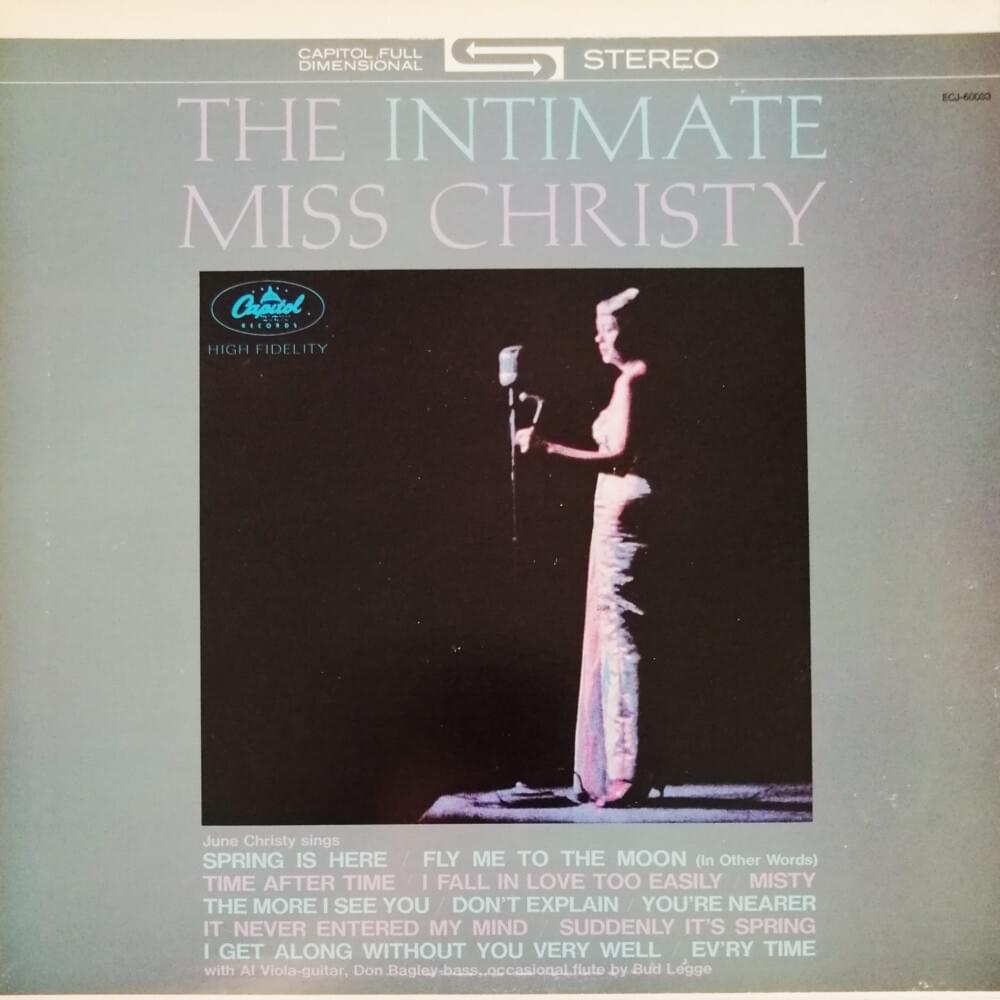
{"song_id": 15876408, "meaning": "June Christy's rendition of \"The More I See You\" isn't merely a love song; it's a study in the addictive nature of infatuation, bordering on a codependent need. The opening lines, \"Each time I look at you / Is like the first time,\" immediately establish a pattern of repetitive, almost obsessive re-engagement. This isn't about mature, evolving love; it's about the constant chase of an initial high. The lyrics hint at a fragile ego, finding validation in the mere \"sight of you.\" The singer isn't celebrating shared experiences or intellectual connection; instead, the focus remains laser-locked on the visual presence of the beloved. The phrase, \"there is nothing that I wouldn't do,\" hints at a dangerous self-abandonment, a willingness to sacrifice personal boundaries for the sake of maintaining the connection. It implies an imbalance of power, where one person's needs overshadow the other's. The \"thrill\" is the reward, not mutual growth. It’s a portrait of someone caught in a loop of seeking external validation. The accelerating intensity – \"The more I see you / The more I want you / Somehow this feeling just grows and grows\" – captures the essence of addictive behavior.
The song’s middle section, particularly the line, \"With every sigh / I become more mad about you / More lost without you and so it goes,\" is particularly telling. The word \"mad\" carries a double meaning here, implying both intense passion and a potential descent into irrationality. The singer acknowledges a loss of self (\"more lost without you\"), suggesting that their identity has become dangerously intertwined with the object of their affection. The repetition of \"and so it goes\" lends a fatalistic tone, as if the singer is aware of the unhealthy dynamic but feels powerless to break free. The lyrics become less about love and more about the singer's dependence.
The final verse seals the song's meaning, turning potentially romantic declarations into something far more unsettling. The lines, \"I know the only one for me can only be you / My arms won't free you, my heart won't try,\" reveal a possessive, almost claustrophobic attachment. The singer isn't offering unconditional love; they're admitting an inability to let go, even if doing so might be in the best interest of both parties. The refusal to \"free you\" isn't an act of devotion, but a subtle admission of control. The song becomes an exploration of the darker side of romantic obsession, where love morphs into a form of psychological entrapment. June Christy’s delivery, with its smooth, almost detached quality, only amplifies the underlying unease, turning a seemingly classic love song into a subtly disturbing portrait of need and control.
"}
 View Artist