Song Meaning
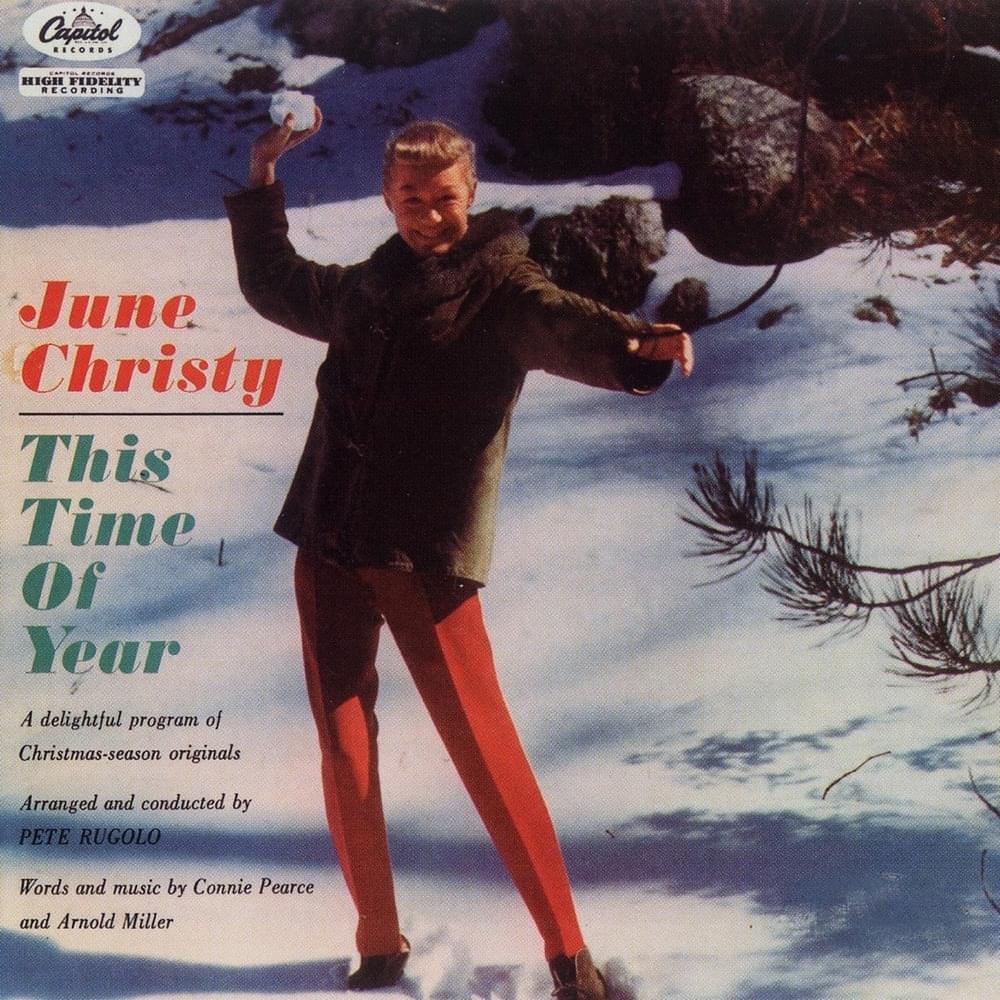
{"song_id": 15876429, "meaning": "June Christy's \"Ring a Merry Bell\" isn't just another saccharine Christmas carol; it's a poignant exploration of displacement and the yearning for connection during a time when those feelings are often amplified. The opening lines, \"Things I have lost and things I am learning / Make the world seem strange,\" immediately establish a sense of disorientation. This isn't about pure holiday cheer; it's about navigating a world altered by loss and the acquisition of new, perhaps unsettling, knowledge. The line \"Wanderers must have something to trust / Never let Christmas change\" serves as a thesis statement: clinging to the familiar rituals of Christmas becomes a lifeline for those adrift.
The repeated refrain, \"Ring a merry bell at Christmas time...I am far from home,\" underscores the central tension. The external performance of holiday joy—the bells, holly, decorations, and carols—masks an internal sense of longing and alienation. Christy isn't simply stating she's physically distant; the \"far from home\" sentiment speaks to a deeper emotional detachment. The meticulous instructions for decorating—\"Tinsel tip the tree / Popcorn and silver, on top a star / So bright that a stranger can see it from afar\"—become acts of desperate hope. These aren't just decorations; they're signals, attempts to bridge the gap between the singer and a lost sense of belonging.
Ultimately, \"Ring a Merry Bell\" works because it acknowledges the complexities of the human experience during the holidays. It doesn't shy away from the sadness and loneliness that can coexist with the forced merriment. The final lines, \"Light the highest brightest star / It may guide me home,\" encapsulate the song's core message. The star, a traditional symbol of hope and guidance, is invoked not as a guarantee, but as a possibility. June Christy delivers a Christmas song for those who find themselves on the periphery, searching for a way back to themselves, or at least a semblance of connection in a world that feels increasingly foreign."}
 View Artist