Song Meaning
The narrator lays out a conditional love, a desire for a partner who embodies a specific, almost performative, aesthetic. They want to see this person "dressed up like a rock-n-roll star" or a "race car driver," images suggesting a larger-than-life persona. This isn't about genuine connection, but about a curated image, a fantasy plucked from "strange magazine" or "late night B-grade trash." The narrator admits, "Then I know I'd love you," highlighting that this idealized presentation is the prerequisite for affection.
The central tension lies in the narrator's proclaimed devotion to their "guitar" versus this conditional desire for a person. The repeated chorus, "'Cause I love my guitar / I love my guitar," acts as a shield, a justification for their emotional distance. It suggests that the guitar, an inanimate object, receives a more straightforward and unconditional love than any potential human partner. This creates a poignant, if self-aware, portrait of someone prioritizing a singular passion over human intimacy.
The lyrics employ a striking contrast between the idealized, external presentation of a partner and the raw, intimate, and possibly destructive energy described in the bridge. The narrator speaks of staying up "late at night" and getting "carried away," "banging the wall, banging the floor." This visceral imagery of unrestrained activity, contrasted with the superficiality of the verses, hints at a deeper, perhaps more chaotic, desire that the narrator struggles to reconcile with their stated affections.
Ultimately, the song's effectiveness stems from this stark juxtaposition. The narrator's repeated assertion of loving their guitar serves as a defense mechanism, a way to manage expectations and avoid vulnerability. The final "I think I'm in love" feels less like a revelation and more like a confused echo, a lingering uncertainty about where their true affections lie – with the tangible passion of music or the elusive ideal of a person.
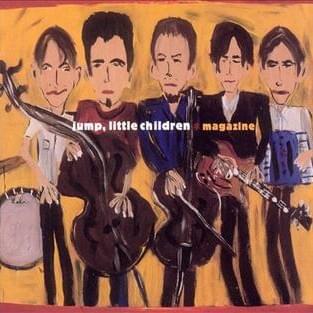
 View Artist