Song Meaning
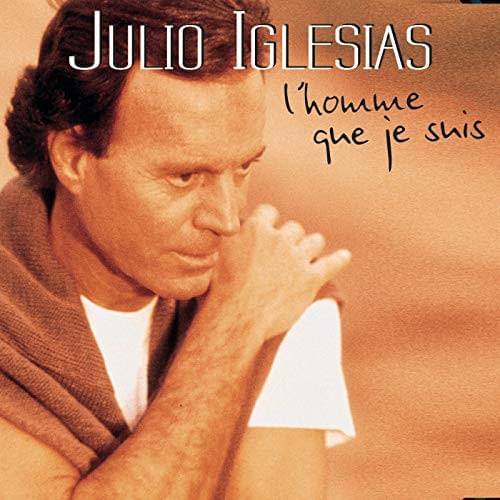
Julio Iglesias' "L'homme que je suis" is a stark, almost brutal, self-assessment disguised as a romantic ballad. The song meaning revolves around the chasm between public persona and private reality, a theme Iglesias, having lived much of his life in the spotlight, is uniquely positioned to explore. The core confession—"Je n'ai jamais été l'homme que je suis" (I have never been the man that I am)—immediately establishes a sense of fractured identity. He acknowledges performing a role, perhaps even unconsciously, driven by insecurities ("Même si je crée des peurs pour rien"). It's a sentiment that resonates in an era of carefully curated online identities; who among us hasn't felt the pressure to present a polished, idealized version of ourselves? The repetition of "même si je ne fais qu'être moi-même" (even if I am only being myself) only serves to deepen the sense of unease. Is he truly being himself, or is 'himself' simply another construct? The song implies a life lived behind masks, a constant negotiation between vulnerability and self-preservation. Ultimately, the lyrics suggest that true authenticity may be unattainable, a lifelong pursuit rather than a fixed state of being.
The latter half of "L'homme que je suis" shifts into a series of plaintive questions: "Est-ce qu'on pardonne vos maladresses?" (Do they forgive your awkwardness?). These lines expose a deep-seated fear of judgment and a plea for understanding. The questions tackle the paradox of celebrity—being both idolized and scrutinized, loved and resented. Iglesias seems to be grappling with the weight of expectations and the impossibility of living up to them. It's a universal anxiety, amplified by fame, but relatable to anyone who has ever felt the sting of disapproval or the burden of their own imperfections. The repetition of "Est-ce qu'on pardonne..." underscores the singer's vulnerability, suggesting that the pursuit of forgiveness, both from others and from oneself, is central to his self-understanding.
Iglesias isn't just singing about personal failings; he's dissecting the very concept of manhood. The line "D'avoir été le temps d'une vie, un homme" (For having been, for the time of a life, a man) acknowledges the inherent limitations and contradictions of masculinity. It's a recognition that being a man is not a fixed state, but a performance, a collection of moments defined by both strength and weakness. The repeated questioning of whether one will be forgiven for "votre faiblesse" (your weakness) and "d'avoir eu peur" (for having been afraid) reveals a challenge to traditional masculine ideals, suggesting that vulnerability and fear are not flaws, but integral parts of the human experience. In this light, "L'homme que je suis" becomes more than just a personal confession; it's a meditation on the complexities of identity, the burden of expectations, and the enduring quest for self-acceptance.
 View Artist