Song Meaning
Julie Andrews' rendition of "He Loves And She Loves" floats on a deceptively simple premise, yet its emotional undercurrents reveal a yearning for reciprocated affection that resonates far beyond the surface. The lyrics, almost childlike in their directness, build a world where love is a universal constant, a natural law observed by birds, bees, and even whispering trees. This idyllic vision serves as both a backdrop and a subtle pressure point, amplifying the singer's plea: "So why can't you love / And I love too?" It’s the sound of someone trying to reason with the unreasonable, attempting to conjure affection through the sheer force of optimistic observation.
At its core, "He Loves And She Loves" explores the vulnerability inherent in unrequited love. The repeated lines, "I always knew some day / You'd come along / We'll make a twosome / That just can't go wrong," betray a hope bordering on delusion. The singer isn't simply expressing affection; she's constructing a narrative, a carefully crafted future where her love is not only returned but destined for success. This imagined certainty acts as a shield against the painful reality of the present, a defense mechanism designed to protect a fragile heart. The song meaning therefore hinges on this tension between idealized fantasy and potential heartbreak.
Ultimately, the song's power lies in its delicate balance of hope and desperation. Andrews' delivery, typically bright and optimistic, adds a layer of poignancy to the lyrics. We hear the unwavering belief in the possibility of love, but also the underlying fear that this belief might be misplaced. The repetition of "He loves and she loves" transforms from a joyful observation into a desperate incantation, a plea whispered into the void, hoping to conjure a love that mirrors the harmonious world she so desperately wants to inhabit. The simplicity of the lyrics is the key here; they lay bare the fundamental human desire for connection and the ache of its absence.
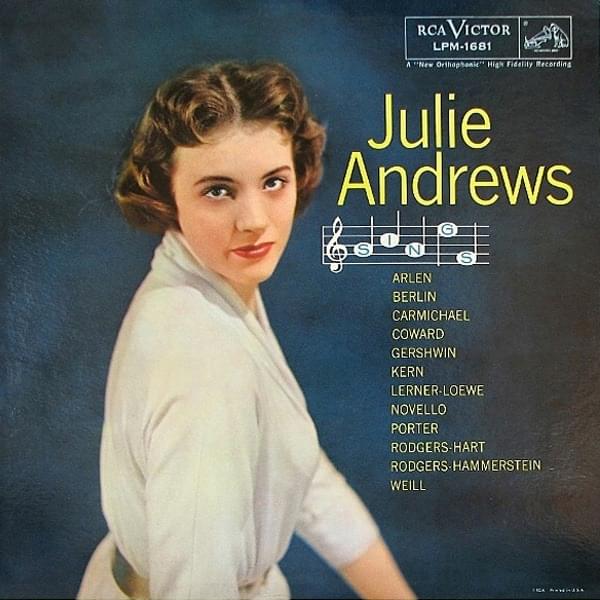
 View Artist