Song Meaning
This track opens with a raw admission of loss, a paradox where the pursuit of connection led to its undoing. The narrator confesses, "Te perdi tentando te encontrar," highlighting a painful irony. The immediate aftermath is a swirl of conflicting emotions: "Me senti traído e traidor," suggesting a deep internal conflict and the messy, often contradictory nature of intense relationships. The initial verses paint a picture of accidental harm and self-recrimination.
The central tension lies in the narrator's struggle to reconcile the destructive power of love with its inherent complexity. The lyrics pose a philosophical question: "E quem viverá um lado só?" implying that the extremes of good and evil, or perhaps joy and sorrow, are inextricably linked in human experience. This duality is presented not as a flaw, but as a fundamental aspect of existence, a "laço forte, um nó" that binds opposing forces.
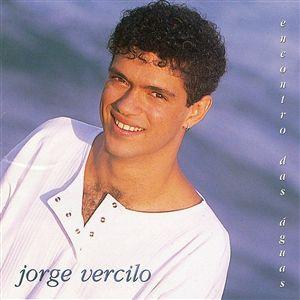
The recurring metaphor of the "encontro das águas" is the song's most striking lyrical device. It transforms the abstract concept of love into a powerful natural phenomenon, a "Rio que não deságua" – a river that never empties. This imagery suggests a love that is overwhelming, unending, and perhaps even destructive, much like the merging of powerful river currents. The narrator's realization, "Aprendi com a dor," underscores that this profound understanding of love only came through suffering.
Ultimately, the lyrics convey a hard-won acceptance of love's untamable nature. The narrator's decision to leave, "Hoje vai pra nunca mais voltar," mirrors the finality of a fisherman's departure when the sea calls. The repeated questioning in the outro, "Quem eu sou / Pra querer / Entender / O amor," signifies a surrender to mystery, acknowledging that love's true essence might be beyond rational comprehension, best understood through its powerful, often tumultuous, manifestations.
 View Artist