Song Meaning
The narrator is stuck in a cycle of longing and isolation, fixated on a past love. The scene opens with a stark contrast: the vibrant, social world of "bright lights" and "wine's overflowing" where the object of affection is present, versus the narrator's solitary state, "whisper[ing] your name." This immediately establishes a feeling of being on the outside, looking in, and consumed by a singular focus.
The dominant tension lies in the narrator's passive acceptance of their situation. Despite acknowledging the emptiness of their surroundings – "Four walls to hear me / Four walls to see" – and questioning their own inaction ("Sometimes I ask why I'm waiting"), they resign themselves to it. The line "I'm made for love not for hating" suggests a self-perception that clashes with the painful reality of waiting, yet the resolve to "here where you left me I'll stay" overrides any impulse to move on.
The most potent image is the "four walls" that become both a physical confinement and a psychological prison. These walls are personified, capable of hearing and seeing, yet utterly silent and unresponsive, mirroring the absence of the person they wait for. This repetition of "four walls" hammers home the feeling of being trapped, with the physical space reflecting the emotional stasis. The narrator is literally "walking the floor," a classic sign of anxious waiting, hoping for a sound, a "knock on my door."
This lyrical construction is effective because it grounds an abstract feeling of heartbreak in concrete, suffocating imagery. The contrast between the external world and the internal confinement, coupled with the narrator's passive yet persistent hope, creates a palpable sense of melancholic inertia. The simple, almost childlike repetition of the "four walls" refrain makes the narrator's desperate, unchanging state feel both intimate and inescapable.
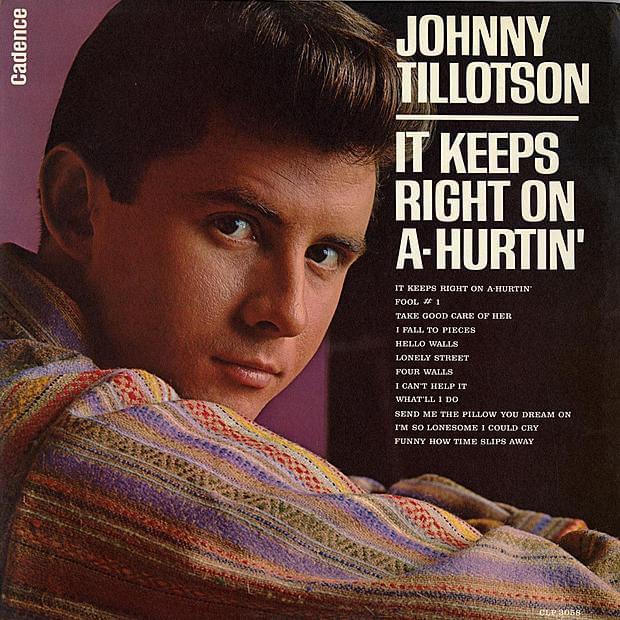
 View Artist