Song Meaning
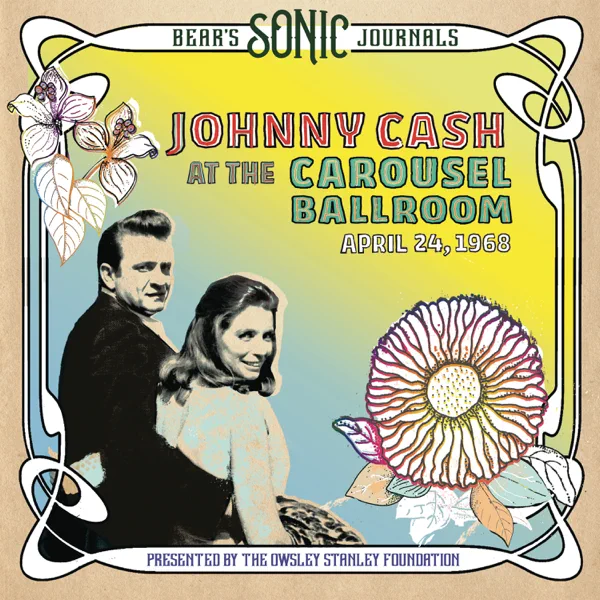
{"song_id": 11777871, "meaning": "Johnny Cash's rendition of \"Foggy Mountain Top,\" recorded live in 1968, transcends its simple folk origins, becoming a meditation on longing, resilience, and the enduring power of song itself. While Cash attributes the melody to the Carter Family and the lyrics to Woody Guthrie, his performance imbues the song with his own world-weary gravitas. The \"foggy mountain top\" serves as both a physical and metaphorical space – a vantage point from which the singer contemplates a journey driven by love and perhaps, a touch of desperation. This isn't just about romantic love; it's about a primal connection, a need to reach \"the boy I love the best\" regardless of the obstacles. The journey \"all around this whole wide world\" speaks to the immensity of the effort, the willingness to go to any length for this connection. The song's power resides in its stark simplicity.
The lyrics hint at a complex relationship dynamic, a suggestion of external interference or jealousy: \"when you see that he is blonde there's something you can't tell her / She need no food, her time away trying to steal my bell.\" This \"bell,\" likely a metaphor for the singer's spirit, happiness, or perhaps even virginity, is under threat. This unnamed \"she\" represents a force of disruption, a rival whose motives are rooted in envy rather than genuine need. The singer's determination to reach her beloved is amplified by the need to protect something precious from being stolen. It suggests a love that is both desired and vulnerable.
Cash's spoken outro further enriches the song's meaning. By acknowledging the song's lineage, he emphasizes the communal nature of folk music and its ability to evolve and adapt across generations. The song becomes a vessel carrying stories and emotions through time. The fact that he believes the words \"kinda be with us for the rest of our lives\" speaks to the song's universality. \"Foggy Mountain Top,\" in Cash's hands, is more than just a love song; it’s a testament to the human spirit's capacity for love, perseverance, and the enduring power of shared cultural narratives."}
 View Artist