Song Meaning
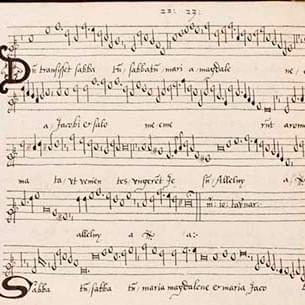
This ancient chant paints a vivid picture of divine inspiration descending upon a group of apostles. The opening lines describe the "Holy Spirit proceeding from the throne of the apostles," invisibly penetrating their "breasts" and marking a "new sign of sanctification." This spiritual force is not external but deeply internal, transforming them from within. The immediate effect is profound: the lyrics state that "all kinds of tongues" began to be born "in their mouths," suggesting a miraculous gift of communication and understanding.
The central tension lies in the nature of this divine arrival. It is described as "fire, not burning but illuminating," a powerful image that contrasts with destructive flames. This "divine fire" doesn't consume but rather enlightens, bestowing "gifts of charisms." The repetition of "Alleluia" and the concluding "Gloria Patri et Filio, et Spiritui Sancto" reinforce the sacred, celebratory, and Trinitarian nature of this transformative event.
The craft here is in its evocative, almost mystical imagery and its focus on the internal experience of divine grace. The contrast between the invisible penetration and the visible manifestation of speaking in tongues is striking. The chant uses potent, concise phrases to convey a complex theological concept – the empowerment and spiritual renewal of the apostles through the Holy Spirit, leading to praise and glory.
 View Artist