Song Meaning
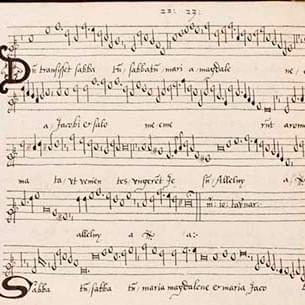
The scene is set with a stark, almost clinical declaration: the Sabbath had passed. Immediately, three women—Mary Magdalene, Mary of Jacob, and Salome—emerge, their purpose clear: to anoint Jesus. The lyrics establish a quiet urgency, a transition from rest to action, marked by the acquisition of spices. This isn't just a task; it's a sacred duty, underscored by the immediate, soaring "Alleluia."
The core tension lies in the timing and the destination. They arrive at the tomb "very early on the first day of the week," precisely as the sun begins to rise. This precise temporal detail highlights their devotion and the profound significance of the moment they are approaching. The contrast between the stillness of the early morning and the monumental event they anticipate creates a palpable sense of anticipation.
The structure itself, a blend of Latin prose and liturgical exclamations, lends a profound gravitas. The shift from the descriptive "Dum transisset Sabbatum" to the active "Emerunt aromata" and then the specific "veniunt ad monumentum" builds a narrative momentum. The final "Gloria Patri et Filio et Spiritui Sancto" feels less like a concluding statement and more like a prayerful invocation, acknowledging the divine context of their actions as they reach their destination.
This passage resonates through its directness and its focus on faithful action. The lyrics don't dwell on emotion but present a clear sequence of events driven by devotion. The precision of the timing and the sacred purpose imbue the scene with a quiet, powerful solemnity, inviting the listener to witness a pivotal moment of faith.
 View Artist