Song Meaning
This pastoral scene paints a picture of idyllic nature preparing for a grand arrival. The lyrics immediately establish a sense of anticipation, with nymphs and Diana's hunting party approaching. The natural world itself seems to pause and adorn itself, suggesting a reverence for the incoming presence. The fawns halt their movement, and the shepherds begin to play their pipes, all contributing to an atmosphere of celebration and awe.
The central tension lies in the contrast between the active, almost competitive, preparations of the shepherds and the passive, amazed reaction of the lambs. The shepherds aim "to show their cunning" with their music, while the lambs are simply "amazed" and "blind their eyes with gazing." This highlights a difference in how the impending event is perceived: one is about performance and skill, the other about pure, overwhelming spectacle.
The most striking craft element is the personification of nature and the elevated, almost divine, company. Diana, the "the earth's goddess," is attended by "the Muses and the Graces," imbuing the scene with mythic significance. This grand assembly causes even the wild animals and the earth itself to react, creating a sense of cosmic importance around Oriana's presence.
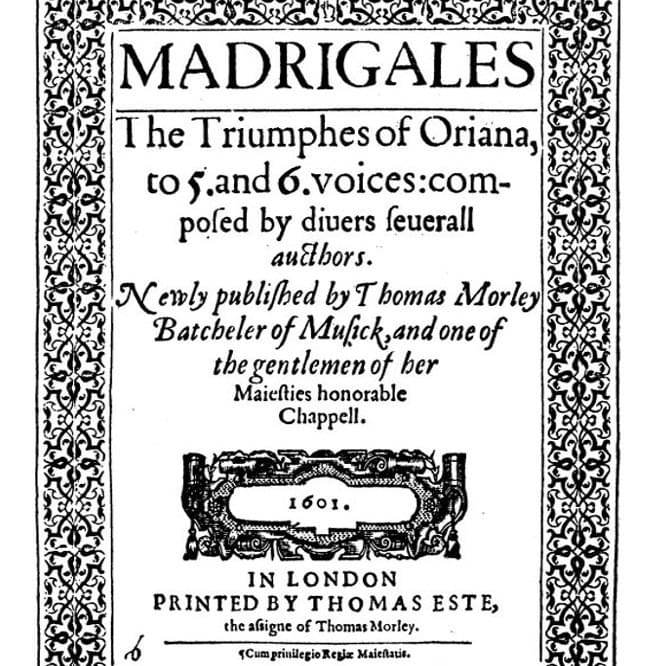
The lyrics achieve their effect through a carefully constructed build-up of wonder and reverence. The collective actions of nymphs, shepherds, fawns, lambs, Muses, and Graces all converge on a single point: the arrival of Oriana. The final, unified acclamation, "Long live fair Oriana," solidifies the celebratory and almost worshipful tone, making the reader feel the weight of this celebrated occasion.
 View Artist