Song Meaning
{"song_id": 12807607, "meaning": "John Anderson's \"You're Right, I'm Wrong, I'm Sorry\" isn't just a country lament; it's a raw, almost masochistic autopsy of a dying relationship. The song's simplicity is its strength, laying bare the agonizing paradox of knowing a love is unsustainable while being utterly unable to extinguish its flame. The repeated mantra of the title becomes a kind of self-flagellation, a desperate attempt to appease the departing lover while simultaneously acknowledging the speaker's own culpability and helplessness. It's the sound of someone swallowing their pride piece by piece, even as it chokes them. The emotional core of \"You're Right, I'm Wrong, I'm Sorry\" resides in the conflict between acceptance and longing. The lyrics reveal a speaker caught in the vice grip of contradictory emotions. Intellectually, they concede the relationship's demise (\"You're right, our love is over\"). Yet, emotionally, they remain tethered by an unyielding affection (\"This love of mine won't end\"). This tension underscores the inherent difficulty of severing emotional bonds, even when logic dictates it's the only course of action.
The refrain, \"I don't know how I'll do it / 'Cause I still love you so,\" amplifies the speaker's internal struggle. It's not merely a statement of sadness; it's an admission of powerlessness. The repetition emphasizes the overwhelming nature of the speaker's feelings, suggesting an almost obsessive quality to their love. This hints at a deeper psychological dynamic, perhaps a pattern of attachment that transcends this specific relationship. The \"song meaning\" circles back to the universal experience of heartbreak, but Anderson's delivery, combined with the stark lyrical honesty, elevates it beyond cliché.
Ultimately, \"You're Right, I'm Wrong, I'm Sorry\" is about the messy, irrational, and often self-destructive nature of love. It acknowledges that love isn't always about mutual happiness or perfect timing; sometimes, it's about clinging to something that hurts, even when you know you should let go. John Anderson doesn't offer easy answers or tidy resolutions. Instead, he leaves us with the raw, uncomfortable truth of a heart in conflict, a truth that resonates long after the final note fades."}
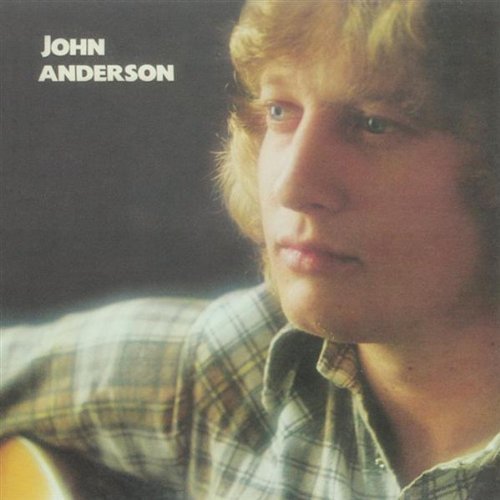
 View Artist