Song Meaning
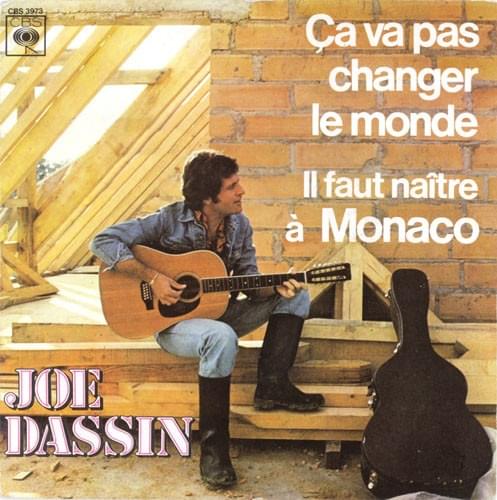
Joe Dassin's "Ça va pas changer le monde" is a masterclass in melancholic detachment, a kind of Gallic shrug in the face of heartbreak. The song meaning revolves around the central paradox of personal devastation set against the indifferent backdrop of the universe. Dassin isn't wallowing; he's observing, almost clinically, the way life relentlessly marches on despite the seismic shift in his own emotional landscape. The repeated refrain, "Ça va pas changer le monde" (It won't change the world), acts as both a coping mechanism and a bitter acknowledgement of his own insignificance in the grand scheme. He knows the world won't stop spinning, even if *his* world has just been irrevocably altered. The irony drips from every line.
The opening verses establish the immediate aftermath of a breakup, a space haunted by the ghost of a lost love. "Tout me parle de toi" (Everything speaks to me of you), he laments, yet he simultaneously downplays the finality of her departure: "C'est un au revoir, presqu'un rendez-vous" (It's a goodbye, almost a rendezvous). This denial is crucial. It's a defense mechanism against the crushing weight of acceptance. The lyrics "On s'est aimés, n'en parlons plus / Et la vie continue" (We loved each other, let's not talk about it anymore / And life goes on) are not an attempt to erase the past, but rather an attempt to compartmentalize it, to quarantine the pain so it doesn't infect the rest of his existence.
However, the song's true brilliance lies in its subtle shift in perspective. While initially, the indifference of the world is presented as a source of comfort or perhaps a way to minimize the pain, the final verses reveal a more profound and unsettling truth. "C'est toi seule qui as changé" (It's only you who has changed), Dassin sings, implying that he, himself, remains stuck in the past, clinging to the illusion of her love. This realization exposes the vulnerability beneath the veneer of nonchalance. He's not unaffected; he's simply choosing to project a facade of stoicism, a carefully constructed defense against the emotional fallout. The final line, "Et la vie continue," no longer sounds like a mantra of resilience, but rather a stark and somewhat tragic reminder of his own inertia. The song's genius is in making you question whether the "world" not changing is a comfort, or the ultimate condemnation.
 View Artist