Song Meaning
The lyrics of "Galo, Grilo E Pavão" plunge us into a vibrant, chaotic scene. Three distinct animals—a rooster, a cricket, and a peacock—are locked in a relentless "batáia," or battle. Each animal brings its own unique "estilo" to the fray, setting the stage for a darkly humorous and surprisingly brutal narrative.
What makes these lyrics so compelling is the escalating tension and the cyclical nature of conflict. Initially, the animals engage in seemingly petty squabbles: the peacock declares "deu grilo!" (a problem arises), and the cricket laughs back, puffing itself up. But the conflict quickly turns sinister, as the rooster, who earlier makes a "continência" (salute), also bothers the peacock and seeks to "crendenciá" some form of authority or "previdença." This suggests a struggle for dominance and order amidst the chaos.
The craft here is particularly sharp in its use of vivid, almost surreal imagery and colloquial language. Phrases like "Galo vê bicho verde / Nas asas da gráia" introduce a touch of the bizarre, hinting at paranoia or distorted perception. The description of them as an "éta trio de arromba" (what a smashing trio) becomes deeply ironic as the conflict escalates. The rooster throws a "bomba" at the cricket, and later, the peacock, facing "falença" (bankruptcy), orders the cricket's death, with the rooster grimly fulfilling the "incumbença."
Ultimately, these lyrics hit hard because they juxtapose a seemingly innocent, fable-like setup with the raw, uncompromising realities of power, betrayal, and violence. The progression from individual "estilo" to a cycle of accusation, command, and execution—where one animal orders another's death and a third carries it out—creates a chilling commentary on the destructive nature of unchecked conflict, all delivered with a disarming, almost playful narrative voice.
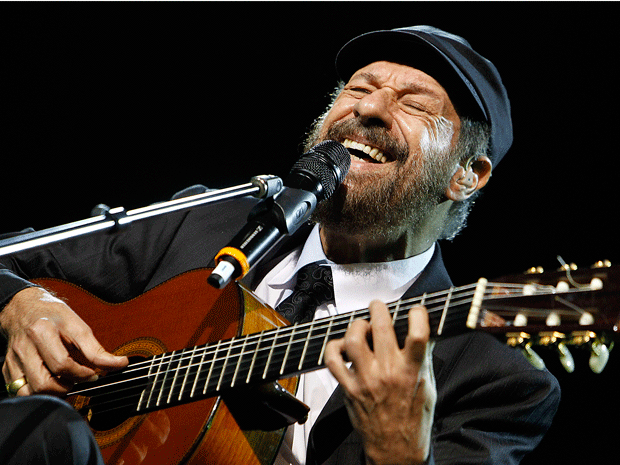
 View Artist