Song Meaning
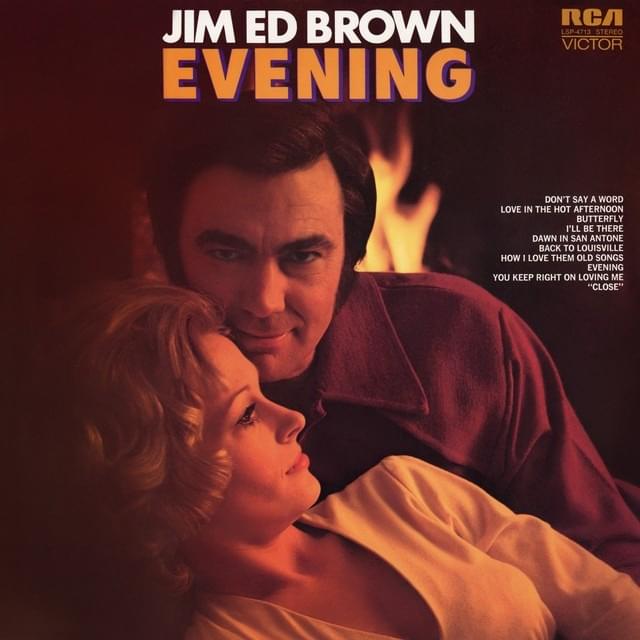
Jim Ed Brown's "Evening" isn't just a country ballad; it's a masterclass in melancholic acceptance. The song meaning revolves around a clandestine affair, shadowed by the inevitability of departure. Brown doesn't dwell on the morality or logistics of the relationship. Instead, he zeroes in on the raw, aching awareness of fleeting intimacy. The lyrics paint a picture of stolen moments, cherished precisely because they are temporary. The opening lines, "Lying here beside you in the shadows with your body close to mine," immediately establish a world of secrecy and physical connection, underscored by the poignant wish to "have you here beside me all the time." This desire, however, is immediately tempered by the knowledge of its impossibility. The man is caught in a loop of desire and resignation. He knows she will leave.
The genius of "Evening" lies in its cyclical structure, both musically and thematically. The recurring image of "evening shadows slipping silent 'cross the floor" serves as a constant reminder of time's passage and the impending separation. It's a visual metaphor for the relationship itself: beautiful, fleeting, and ultimately destined to fade into darkness. The chorus isn't a plea or a protest, but a weary observation. He "curses the day for comin' to an end," but there's no real anger, just a profound sadness. The act of her fixing "your face, comb your hair" before leaving is a small, intimate detail that speaks volumes about the delicate balance of their connection.
The second verse deepens the sense of acceptance, albeit a bittersweet one. "When we're here together I don't question why you came or why you go," Brown sings, suggesting a level of emotional maturity, or perhaps a weary resignation. He acknowledges her reasons for leaving, focusing instead on the present moment. There's a subtle power dynamic at play here; he's aware of his limited control, yet finds solace in simply knowing she chooses to be with him, however briefly. The line, "Just like all the other times you'll leave me at the ending of the day," reinforces the cyclical nature of their affair and the enduring ache of impending loneliness. Ultimately, "Evening," through its simple yet evocative lyrics, captures the bittersweet essence of a love affair lived in the shadows, where the joy of connection is perpetually tinged with the pain of parting.
 View Artist