Song Meaning
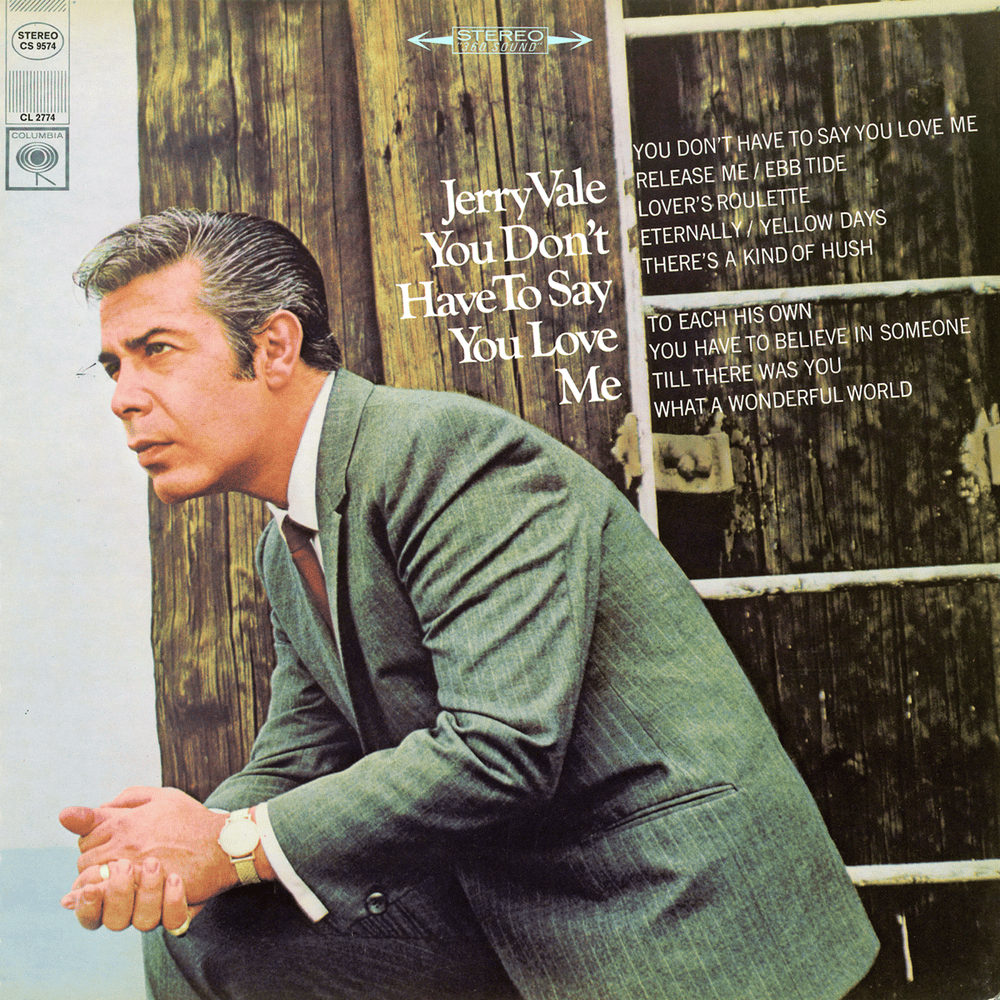
Jerry Vale's rendition of "You Don't Have to Say You Love Me" is a masterclass in the psychology of desperate affection. The song, at its core, isn't about grand romantic declarations; it's about the quiet, agonizing negotiation that occurs when love becomes unbalanced. The speaker, seemingly abandoned after a promise of unwavering support, pleads not for reciprocated ardor, but for proximity, for a mere presence that would stave off the crushing weight of solitude. This is where the song's emotional intelligence shines; it understands that sometimes, love isn't a shouting match, but a hushed, internal bargaining session. The genius lies in admitting that he'll 'understand' if she doesn't stay forever, accepting the inevitable end to their romance, which emphasizes his fear of loneliness.
The repeated refrain, "You don't have to say you love me, just be close at hand," reveals a profound understanding of attachment theory. It speaks to a deep-seated need for security and availability, even in the absence of overt affection. The speaker is willing to forgo the performative aspects of love – the declarations, the grand gestures – in exchange for the simple reassurance of nearness. This hints at a possible history of insecure attachment, a pattern of seeking validation through proximity rather than genuine emotional connection. The repeated assurances, "Believe me, believe me, I can't help but love you / But believe me, I'll never tie you down," further underscore this dynamic, portraying someone willing to sacrifice their own needs to avoid perceived abandonment.
Ultimately, "You Don't Have to Say You Love Me," as interpreted by Vale, explores the vulnerability inherent in unconditional love. The lyrics paint a portrait of raw emotional need, of the lengths to which one will go to maintain a connection, even when faced with rejection. The stark admission that "all that's left is loneliness / There's nothing left to feel" is a chilling testament to the isolating power of lost love. It's a song that resonates not because it celebrates romance, but because it lays bare the fragile, sometimes desperate, underbelly of the human heart yearning for connection.
 View Artist