Song Meaning
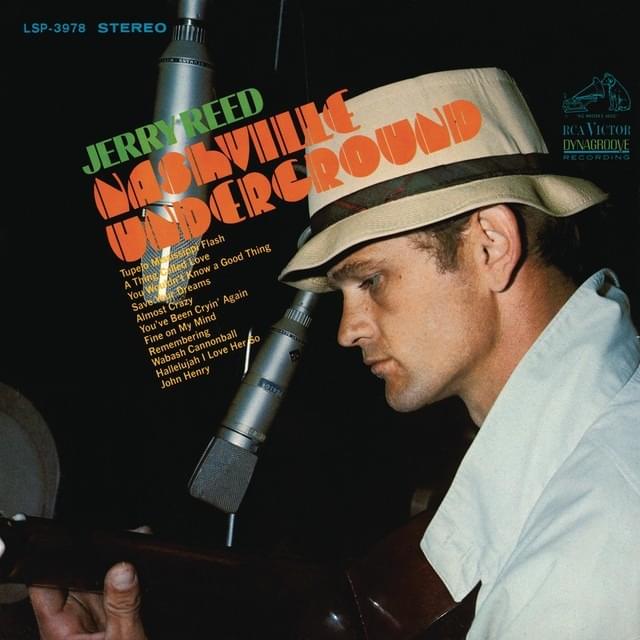
Jerry Reed's "A Thing Called Love" isn't just a country-fried ode to romance; it's a meditation on love's paradoxical power, delivered with a wink and a knowing grin. Reed doesn't dissect love with flowery language; instead, he presents anecdotal evidence, painting pictures of tough men undone by its force. The six-foot-six, 235-pound 'giant of a man' brought to his knees is the perfect illustration – a figure of unwavering strength humbled by an unseen force. This sets the stage for understanding love not as a weakness, but as a fundamental power dynamic. It's a force capable of subverting even the most stoic, traditionally masculine figures. Reed uses the transformation of this figure as a way of indicating the ubiquity of love, and it's power over everyone.
The song's genius lies in its simple, accessible language. Reed acknowledges the everyday struggles and doubts that consume most people, the busyness of 'livin'' that leaves little room to contemplate something as abstract as 'love.' He positions himself within this group, as someone who struggles with the concept. This makes the subsequent affirmation of love's power all the more resonant. It's not some ethereal ideal reserved for poets and dreamers; it's a tangible force woven into the fabric of human experience. The lyrics suggest that to be human is to experience, and be changed by, the force of love.
The maternal image – a mother's tenderness towards her child – provides a crucial counterpoint to the earlier examples of masculine vulnerability. It reframes love not just as a force that can 'let you down,' but as a benevolent, life-affirming presence. Reed's acknowledgment that the world is 'blessed with a word called love' moves beyond personal experience to a broader, almost spiritual, understanding. The repeated refrain, 'Can't see it with your eyes, hold it in your hand,' emphasizes love's intangible nature, comparing it to the wind. "A Thing Called Love," therefore, becomes less about defining love and more about acknowledging its undeniable, often disruptive, presence in a world preoccupied with the tangible and the measurable.
 View Artist