Song Meaning
Jeff Tweedy's "Love Is the King" doesn't offer easy answers, but instead wrestles with the contradictions of hope in a world seemingly designed to crush it. The opening verses paint a stark picture of vulnerability and struggle. Tweedy sings of being "at the edge / Of as bad as it gets," a boxer blind and sinking, clinging and bleeding. The language is visceral, immediate, grounding the listener in a space of raw, almost unbearable, honesty. The repeated line, "Life isn't fair," isn't a lament so much as a defiant acknowledgment of reality. It's the ground from which the song's central paradox springs. How can love be king in such a world? The chorus offers no explanation, only the stark assertion: "Love is the king."
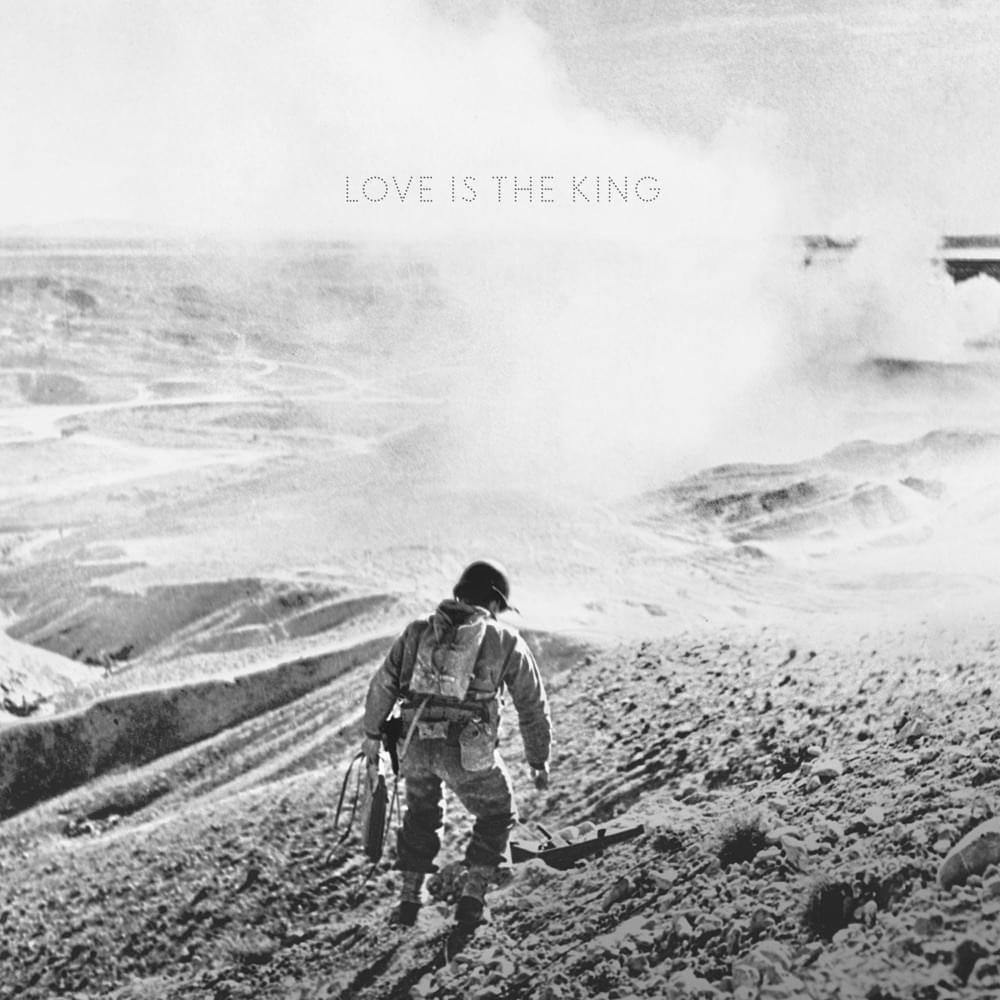
The second verse deepens the complexity. Tweedy juxtaposes the idealistic vision of "beautiful dreams" and singing with the ominous presence of "tanks in the streets." The tanks, described with a chillingly detached simile as "cats / Watching with skill / Green and grey / Violent and still," represent oppressive power, a constant threat looming over the possibility of joy. This is not naive love, blind to the world's darkness. It's a love that exists alongside, and perhaps even in defiance of, that darkness. It's a love aware of "stones and slings," aware of what happens "when push comes to shove," yet still proclaiming itself sovereign.
The repetition of "Love is the king" throughout the song functions almost as a mantra, a repeated affirmation in the face of overwhelming evidence to the contrary. It's a survival mechanism, a way of clinging to hope when everything seems to be falling apart. The song meaning resides not in a simple declaration of love's power, but in the tension between that declaration and the brutal reality it confronts. It's a love that acknowledges pain, acknowledges injustice, yet still insists on its own enduring, if precarious, reign.
 View Artist