Song Meaning
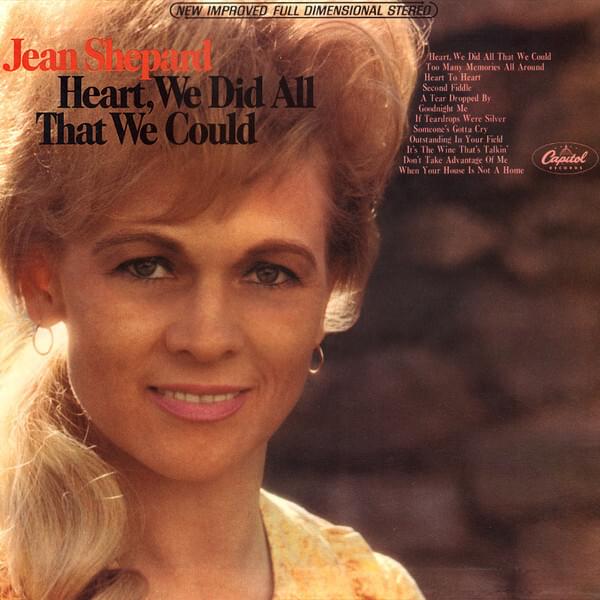
Jean Shepard's "If Teardrops Were Silver" isn't just a country lament; it's a masterclass in ironic self-awareness. The song's core conceit—flipping pain into desirable commodities—cuts deep because it exposes the listener's own potential for romantic delusion. Shepard isn't wallowing passively; she's actively dissecting the absurd ways we try to find value in heartbreak. The 'what if' scenarios aren't escapist fantasies, but rather a means of highlighting the stark reality of her suffering. The song cleverly uses dark humor to explore themes of grief, loss, and the human tendency to romanticize pain.
The lyrics' power lies in their relentless string of conditional statements. "If heartache was laughter, then I'd be a clown..." Each 'if' clause sets up a world where her suffering would be a source of power or wealth, only to underscore the fact that it isn't. This constant juxtaposition creates a sense of bitter irony, forcing the listener to confront the futility of trying to find a silver lining in every cloud. The recurring line, "If teardrops were silver oh how I'd shine," serves as a potent symbol of this desire for transformation. It's a yearning to turn pain into something beautiful and valuable, a desire that ultimately remains unfulfilled.
Beyond the surface-level sadness, “If Teardrops Were Silver” hints at a deeper psychological truth: sometimes, we become comfortable in our misery. Shepard sings, "But hurting's not heaven it's more like someplace else / But hurting is the one thing that I do so well." This admission is perhaps the most devastating line in the song, revealing a sense of resignation and a recognition that her identity has become intertwined with her suffering. She's not just lamenting the loss of a lover; she's grappling with the loss of herself. The song becomes an exploration of how grief can become a self-fulfilling prophecy, trapping us in a cycle of pain that we struggle to break free from.
 View Artist