Song Meaning
This song paints a picture of a singular, profound love that defined a life. The narrator states plainly, "Solamente una vez amé en la vida," establishing a tone of absolute finality and deep significance. This wasn't just any love; it was the sole instance where "en mi huerto brilló la esperanza," suggesting a barren existence illuminated by this one experience. The emotional weight rests on this idea of singularity, making the past love the only source of light against a backdrop of "soledad."
The core tension lies in the contrast between the overwhelming joy of this singular love and the implied emptiness that followed. The act of loving is described as a "milagro" and a "prodigio," something miraculous and rare that leads to "campanas de fiesta en el corazón." Yet, the repetition of "Solamente una vez" and "nada más" underscores that this moment is irrevocably past, leaving a profound sense of loss or perhaps a cherished, yet unrepeatable, memory.
The most striking aspect of the lyricism is the consistent use of "una vez nada más" (only once more). This phrase acts as a powerful refrain, hammering home the exclusivity and irreplaceability of the experience. It elevates the act of loving to a total surrender, "se entrega el alma / Con la dulce y total renunciación," a complete giving of oneself that, by its very nature, could only happen once. The imagery of "campanas de fiesta" (party bells) is a vivid internal sensation, a joyous celebration within the heart that stands in stark contrast to the external "soledad."
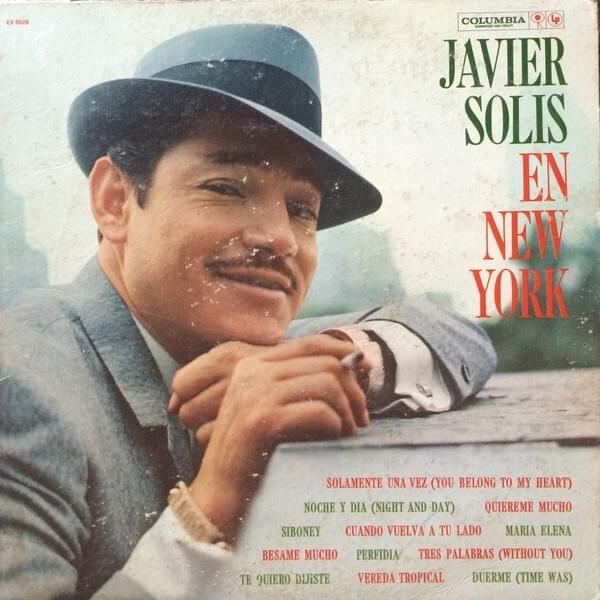
 View Artist