Song Meaning
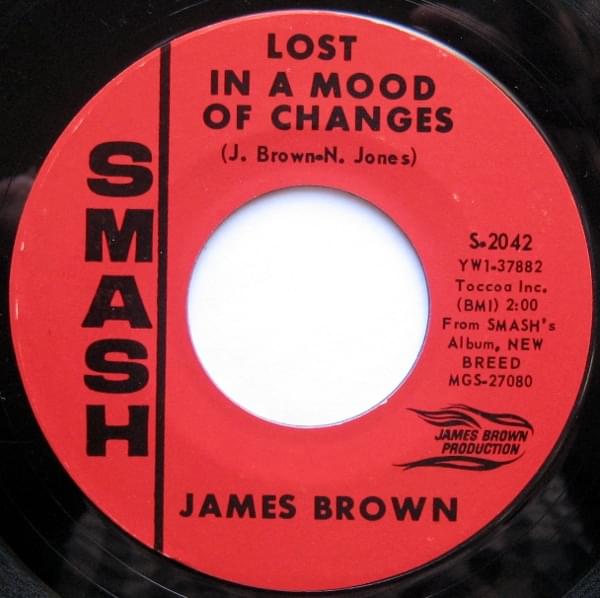
{"song_id": 12427841, "meaning": "James Brown's \"Lost In A Mood of Changes\" isn't so much a song as it is a primal scream distilled into its purest, most repetitive form. The lyrics, stark and minimal, paint a portrait of emotional turmoil, where the push and pull of love and need clash against the instability of constant change. The obsessive repetition of the phrase \"Lost in a mood of changes\" underscores a feeling of being adrift, caught in the unpredictable currents of life and relationships. It's a mantra of disorientation, a verbal echo of the internal chaos that Brown so often channeled into his electrifying performances. The phrase itself suggests the singer is not merely experiencing change, but is entirely consumed by it, lost within its labyrinthine corridors. This speaks to a potentially volatile emotional state, one where the individual's sense of self is threatened by external forces. It's as though the 'mood of changes' has become the defining characteristic of the singer's existence.
The raw, almost desperate declarations of \"Yes, I love you / Yes, I need you, AHH\" punctuate the feeling of being lost. These cries are not declarations of strength, but rather vulnerable pleas that expose the singer's reliance on another person for stability. The \"AHH\" adds a guttural dimension, a non-verbal expression of pain and yearning that transcends simple affection. It's the sound of need bordering on desperation, a craving for connection in the face of overwhelming uncertainty. The juxtaposition of these declarations against the repeated phrase highlights the central conflict: the desire for constancy in a world—or relationship—defined by its impermanence.
Ultimately, \"Lost In A Mood of Changes\" functions as a psychological portrait, capturing a moment of intense emotional vulnerability. It's a snapshot of a mind grappling with the shifting sands of love and life, clinging to connection as a lifeline in a sea of uncertainty. The song's power lies not in its lyrical complexity, but in its raw, unflinching honesty. Its repetitive structure only amplifies the feeling of being trapped, making it a powerful, if unsettling, expression of the human condition. It's James Brown at his most elemental, translating inner turmoil into a visceral sonic experience."}
 View Artist