Song Meaning
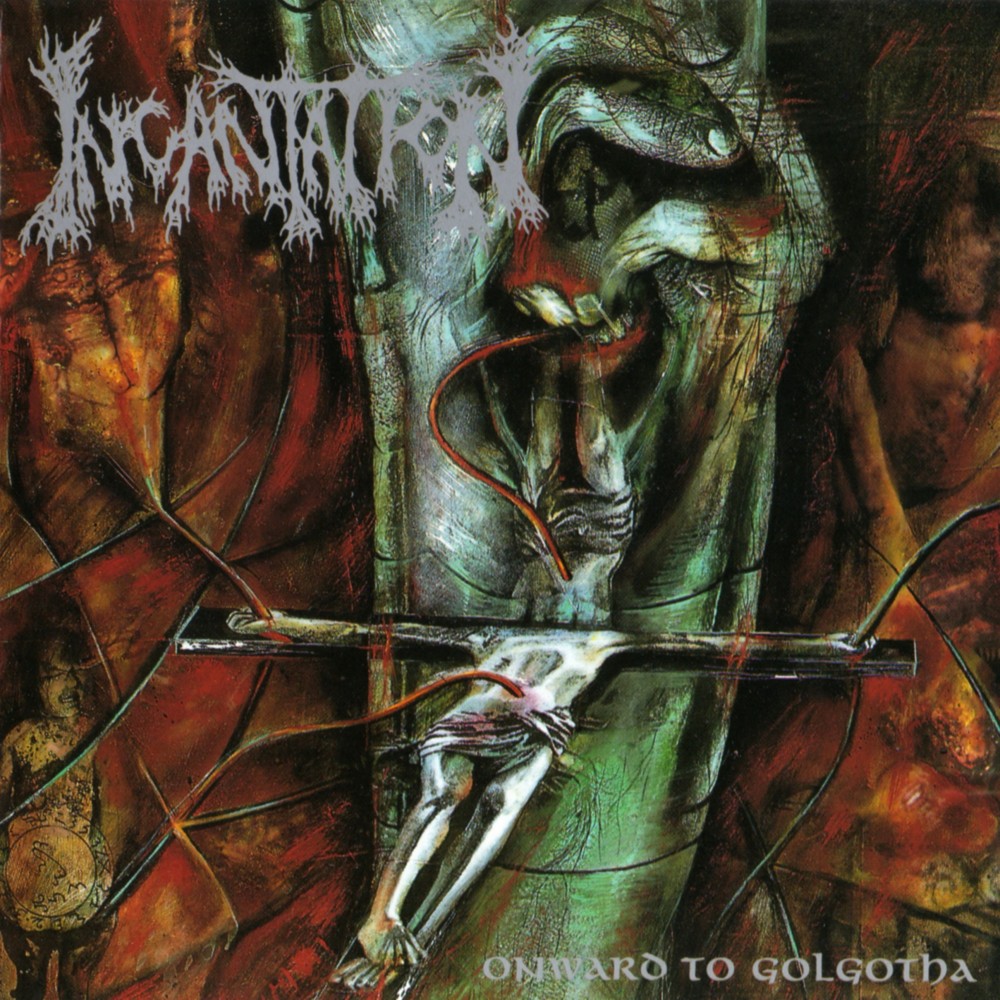
The lyrics paint a stark, almost accusatory picture of a "feeble man" arriving at "Golgotha," a place synonymous with suffering and crucifixion. There's an immediate sense of judgment, as this arrival is framed as "provoking his crucifixion" and leading to "everlasting damnation." The tone is severe, almost biblical in its pronouncements, setting up a confrontation between a divine or higher power and a flawed, weak humanity.
The central tension lies in the contrast between the perceived weakness of humanity and the immense consequence of its actions. The "feeble saviour" is destined to "suffer evermore," a fate seemingly brought about by this human failing. The repetition of "suffer" amplifies the inescapable nature of this punishment, suggesting a cyclical or eternal torment directly linked to this human "coming forth."
The most striking aspect of the craft is the archaic, formal language, which lends a sense of ancient, unyielding decree. Phrases like "hast come forth unto us" and "Thus to endure" create a dramatic, almost theatrical pronouncement. The direct address, "Suffer!" acts as a sharp, imperative command, cutting through the more narrative sections and emphasizing the raw, unavoidable pain.
This lyrical construction is effective because it uses its elevated, almost alienating language to underscore the gravity of the situation. It doesn't aim for relatable everyday struggle but for a grand, theological pronouncement of doom. The stark imagery and the relentless focus on suffering create a powerful, albeit bleak, emotional impact, leaving the listener with a sense of inevitable, divinely ordained consequence.
 View Artist